AI Image Generators vs Stock Photography: A 2026 Comparison


An AI image generator creates original images from a text prompt or a reference, while traditional stock photography licenses pre-shot images from a library. For most professional and marketing work, generation is the stronger default: it wins on uniqueness, brand fit, cost at volume, and licensing clarity. Stock is now a narrow fallback, needed mainly when an image has to be a real photograph of a real event, a recognizable public figure, or a named location. The strongest approach makes generation the default and reserves stock for those few cases. getimg.ai is a practical way to generate on-brand images at scale.
Why Original Imagery Beats Generic Stock
The comparison is not really about price, it is about which image gets looked at. In eyetracking research, Nielsen Norman Group found that users ignore stock photos of generic people and scrutinize photos of real products and real people instead, summarizing the pattern as "jazzed-up equals ignored."
Decorative stock that carries no information is skipped regardless of how polished it looks. That reframes the whole decision: the goal is not the cheapest image but the relevant, on-brand image that earns attention, and generation is built to produce exactly that on demand rather than pulling a picture thousands of other brands have already used.
AI Image Generation vs Stock Photography at a Glance
Each method has a natural home. Classic stock is a finished library you search; AI stock generation is a supply line you direct. The table below maps the dimensions that usually decide a professional's choice, so you can see at a glance where each pulls ahead rather than treating one as universally better.
Dimension | AI Image Generation | Classic Stock Photography |
Uniqueness | Original every time | Shared across many buyers |
Brand Fit | Made to your brief | Closest available match |
Cost of One More Image | Marginal | Another license |
Turnaround | Minutes | Search, license, download |
Format & Ratio Flexibility | Generate or resize to any format | Whatever was shot |
Real Events & Public Figures | Not the tool for this | Best |
Learning Curve | A clear prompt | None |
What Generation Gives That Standard Stock Structurally Cannot
Beyond looking unique, AI stock generation removes two problems built into how traditional stock works. The first is the overused-stock effect: a popular library image is licensed by thousands of buyers, so it grows recognizable as stock and, as the eyetracking research above shows, easy to tune out. An image made for you never carries that used-everywhere signal.
The second is the release question. Stock photos of identifiable people or private property depend on model and property releases you have to trust and, for some uses, verify, whereas a generated scene has no real person to release, which sidesteps that paperwork, with the trade that you should avoid closely resembling a real, identifiable individual.
These are structural gaps, not matters of degree: no amount of searching makes a shared stock image exclusive, and no standard license makes a photographed stranger's likeness yours to use freely. It is also why generation scales into daily production in a way library search does not. Once an image is a prompt rather than a hunt, choosing a capable generator matters more to your output than any single stock subscription, because output quality and control vary widely between tools.
When You Might Still Need Regular Stock
Honesty about the limits keeps expectations correct. Stock remains the right tool for genuine documentary and editorial needs: a real news event, a specific historical moment, or authentic on-the-ground reportage that has to be a real photograph.
It is also the safer route when you need a recognizable public figure, a trademarked product you do not own, or a named real-world location, where a licensed, rights-cleared image avoids likeness and identity problems. These cases are real, but for most brands they are a small share of total image volume.
Cost and Licensing Compared
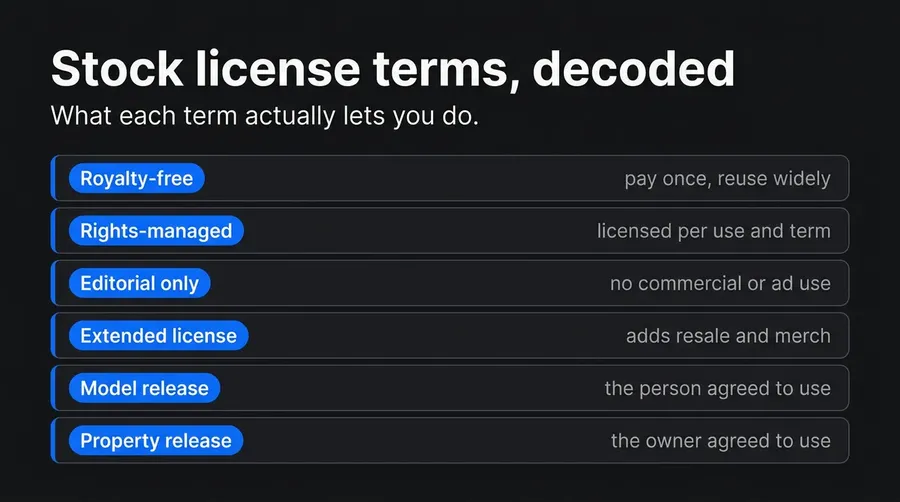
The economics diverge sharply once you need more than one image. Stock charges per license or through a subscription with download caps, and many uses, such as merchandise, resale, or large print runs, require an extended license at a higher price. Generation front-loads a subscription and then makes each additional image marginal, with commercial rights included rather than metered per asset.
Factor | AI Image Generation (getimg.ai) | Classic Stock Photography |
Pricing Model | Subscription, then marginal per image | Per image or capped subscription |
Commercial Use | Included on all paid plans | Standard vs extended license tiers |
Exclusivity | Original to you | Non-exclusive unless bought up |
Merchandise & Resale | Covered by commercial rights | Often needs an extended license |
Volume Scaling | Batches at marginal cost | Cost rises per download |
On getimg.ai, commercial rights are included on every paid plan rather than locked behind an enterprise tier, so images are cleared to publish, sell, and use in client work without a separate license purchase, subject to standard use policies. For high-volume programs, that licensing clarity is often as valuable as the cost saving.
How to Use Both Without the Compromise
The practical answer is not either-or. Make generation your default for anything brand-specific, and keep stock for the narrow set of real-world needs above. A workable division of labor looks like this:
- Default to generation for hero images, product scenes, backgrounds, and social visuals that should be unique to your brand.
- License stock only for real events, real public figures, or named locations you cannot legitimately generate.
- Hold a consistent look across generated images by saving your style, product, or people as reusable Elements so a campaign stays coherent.
- Adapt each winning image to every channel by resizing, rather than licensing a new crop for each ratio.
- When you already have a usable photo of your own, feed it in as a reference to generate on-brand variations from it, instead of searching stock for the nearest match.
One account also covers many models at once, so photoreal product shots, illustrative social art, and typographic pieces all come from the same place instead of several separate tools and subscriptions. For product-led teams, that turns e-commerce visuals from a recurring licensing line item into an in-house supply line.
The Bottom Line
AI image generation and traditional stock photography are not equivalents with one obviously ahead; they solve different problems. Classic stock is a finished library, unbeatable for real documentary moments and rights-cleared real people and places. Generation is a production capability, unbeatable for original, on-brand imagery at volume, speed, and marginal cost, with commercial rights included.
For the bulk of professional and marketing work, which is brand-specific rather than documentary, generation is the stronger default, and stock becomes the specialist you call only when a real photograph is genuinely required.
Start generating original images on getimg.ai.
Frequently Asked Questions
For most professional and marketing work, yes, because that work is brand-specific rather than documentary. Generation produces original images matched to your brief, at volume, in minutes, with commercial rights included, whereas stock offers the nearest existing match shared with every other buyer.
Stock still wins for real news events, recognizable public figures, and named locations, where a rights-cleared real photograph is required. The strongest approach makes generation the default for anything on-brand and keeps stock for the small set of genuine real-world needs, rather than treating either as universally superior.
Beyond a single image, generation is usually cheaper and the gap widens with volume. Stock charges per license or through a capped subscription, and demanding uses like merchandise or large print runs often require a pricier extended license. Generation front-loads one subscription and makes each additional image marginal, with commercial rights included rather than metered per asset.
Since most brands need many images across formats and seasons, not one, the aggregate cost advantage of generation is large, especially when the alternative is repeatedly licensing new crops and extended-use rights.
On getimg.ai, commercial rights are included on every paid plan, so you can publish, sell, and use generated images in client work, marketing, and merchandise without buying a separate license, subject to standard use policies. This is a meaningful contrast with stock, where standard licenses often restrict resale, merchandise, or high-volume print and push those uses into a higher extended-license tier.
Always confirm current terms for your specific use, but for everyday commercial work, generated images on a paid plan are cleared to use from day one rather than gated behind an enterprise agreement.
Lock your recurring look into reusable getimg.ai Elements. Save a brand style, a product, or a person once, then call it into every prompt so outputs match rather than drifting between generations. Combine that with a clear prompt and, where a placement needs a different shape, resize the approved image instead of regenerating from scratch.
This is how generation matches the one thing stock cannot offer, a coherent set built for your brand, while still giving you originality and volume. Consistency comes from directing the tool with saved references, not from hoping separate generations happen to align.
Related Articles