How to Create Dark and Moody Food Photos With AI

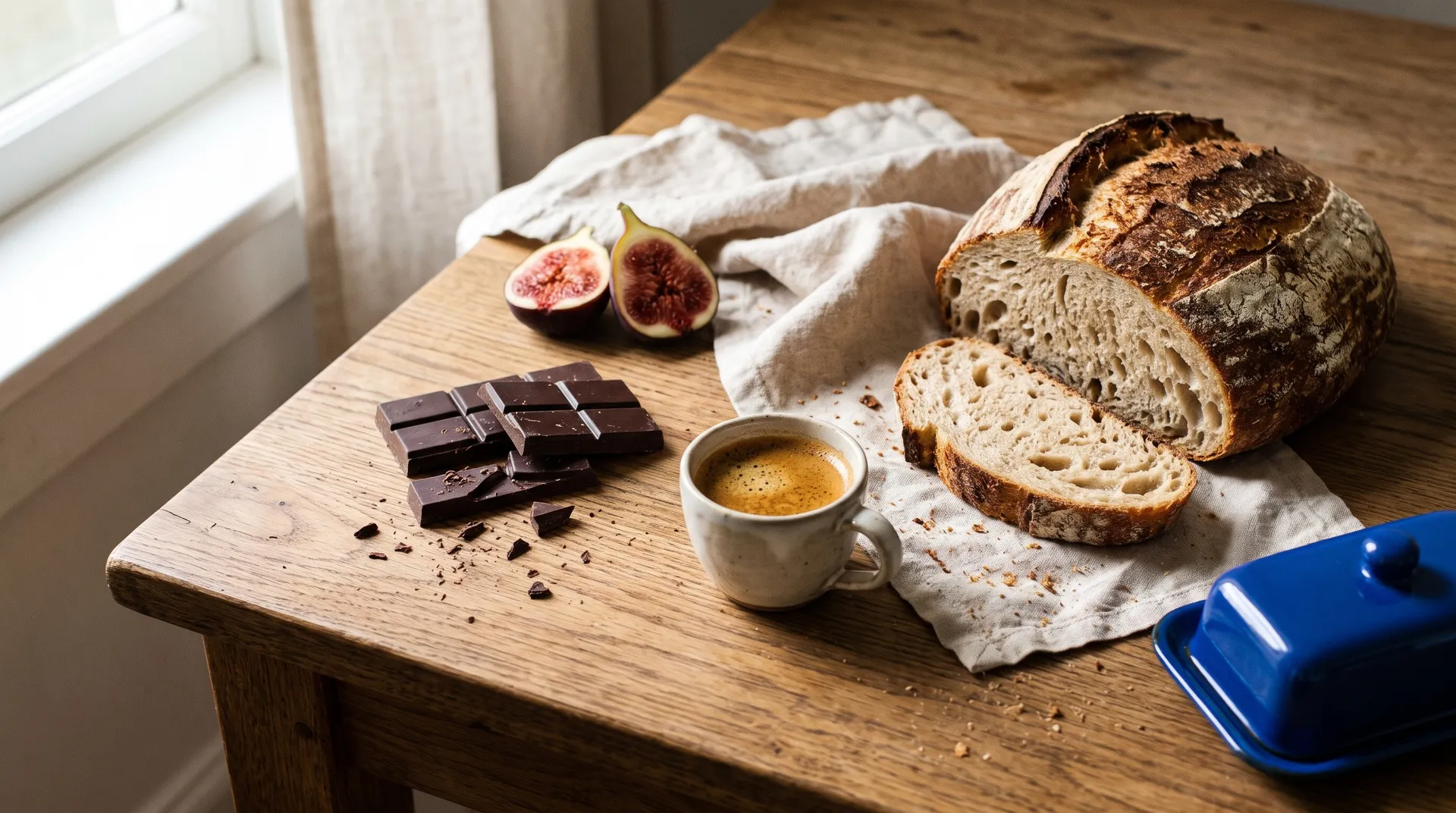
Dark and moody food photography uses a dark background, a single soft side light, and deep shadows to make food look rich, textured, and intimate. The light falls across the food from one direction, usually like a window, and the rest of the scene fades into darkness. With AI, you get the style by describing the dark surface, the direction of that one light, the props, and the palette, or by relighting a food photo you already have.
What Dark and Moody Food Photography Is
Dark and moody food photography is a style built on low light, dark tones, and one soft light source. It is the food-world version of low-key lighting: most of the image sits in shadow, and the light picks out texture, such as the crust of bread, the sheen on a sauce, or the crema on an espresso.
Unlike the bright, airy style common on delivery apps and recipe sites, the dark style slows the viewer down. It suggests craft, richness, and an evening atmosphere, which is why bakeries, coffee roasters, chocolatiers, wine bars, and restaurants use it for menus, packaging, and seasonal campaigns.
The light is softer than in product photography. Where low-key lighting for product photos often uses a hard key light to carve glass and metal, food needs a diffused light that wraps around shapes and keeps them appetizing. Hard light on food tends to look harsh and can make dishes look dry.
The Four Ingredients of the Look
Every dark and moody food image comes down to four decisions. Get these right in the prompt and the rest follows.
Ingredient | What to choose | Prompt cue |
Light | One soft light from the side or slightly behind | "soft window light from the left, the rest in shadow" |
Surface | Dark, textured, matte | "dark weathered wood," "black slate," "charcoal linen" |
Palette | Deep browns, blacks, muted greens, one warm accent | "deep brown and black tones, muted palette" |
Props | Few, worn, real | "a crumpled linen napkin, an old silver spoon, scattered crumbs" |
Side light reveals texture, while backlight makes steam, syrup, and drinks glow. Front light flattens food and is best avoided. For the surface, matte materials keep the shadows rich; glossy black adds reflections, which suit drinks but distract around plated food.
The palette needs one warm accent, such as a red berry, a copper pan, or a golden crust, so the image doesn't read as monochrome. With props, imperfection is part of the style. Crumbs, drips, and a torn piece of bread make the scene believable, while pristine props look staged.
Prompts by Category
Each prompt below follows the four ingredients. Swap the food and keep the structure.
Coffee
Coffee suits backlight, which makes the crema glow and shows the steam.
"A cup of espresso with thick crema on a dark weathered wooden table, soft light from behind and slightly to the left, visible steam rising, scattered coffee beans and a small brass spoon, deep brown and black tones, the background fading into darkness, dark and moody food photography."
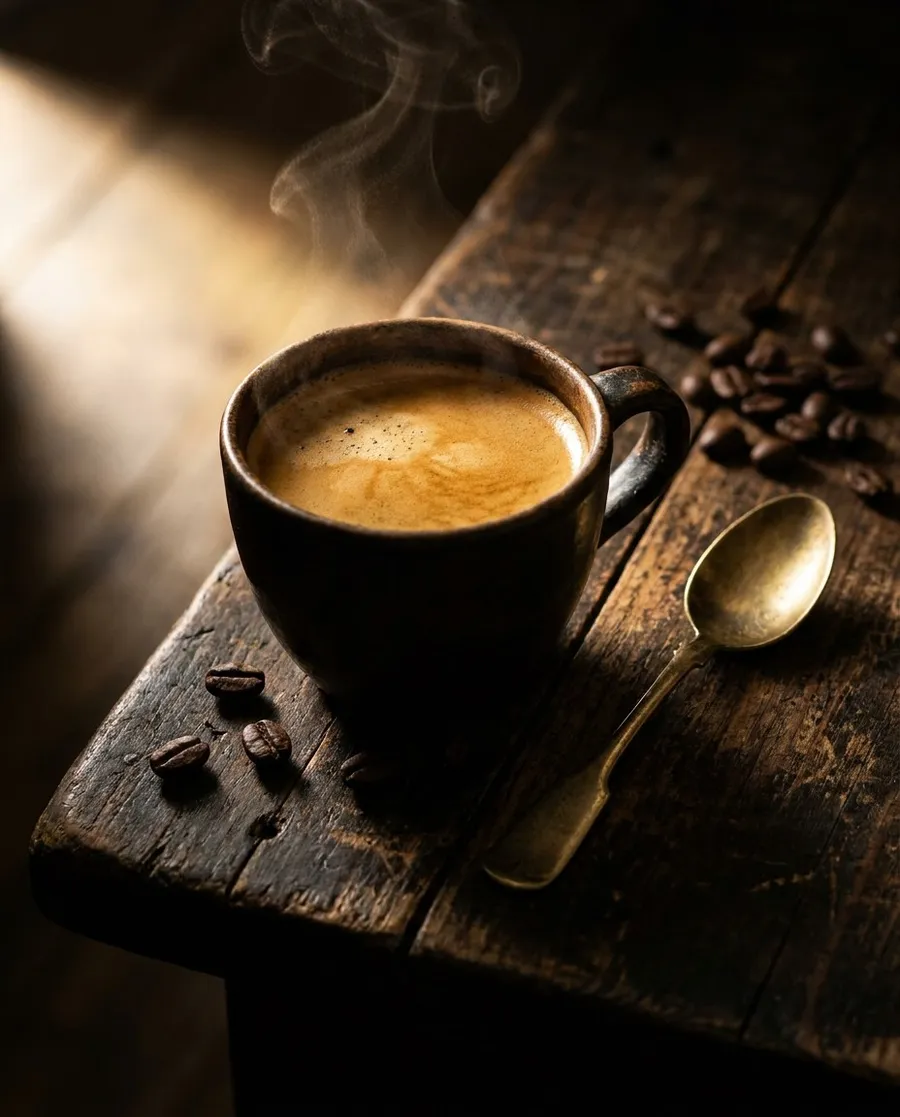
Variation for a roaster: replace the cup with an open bag of beans, or a pour-over with a thin stream of coffee caught in the light.
Chocolate
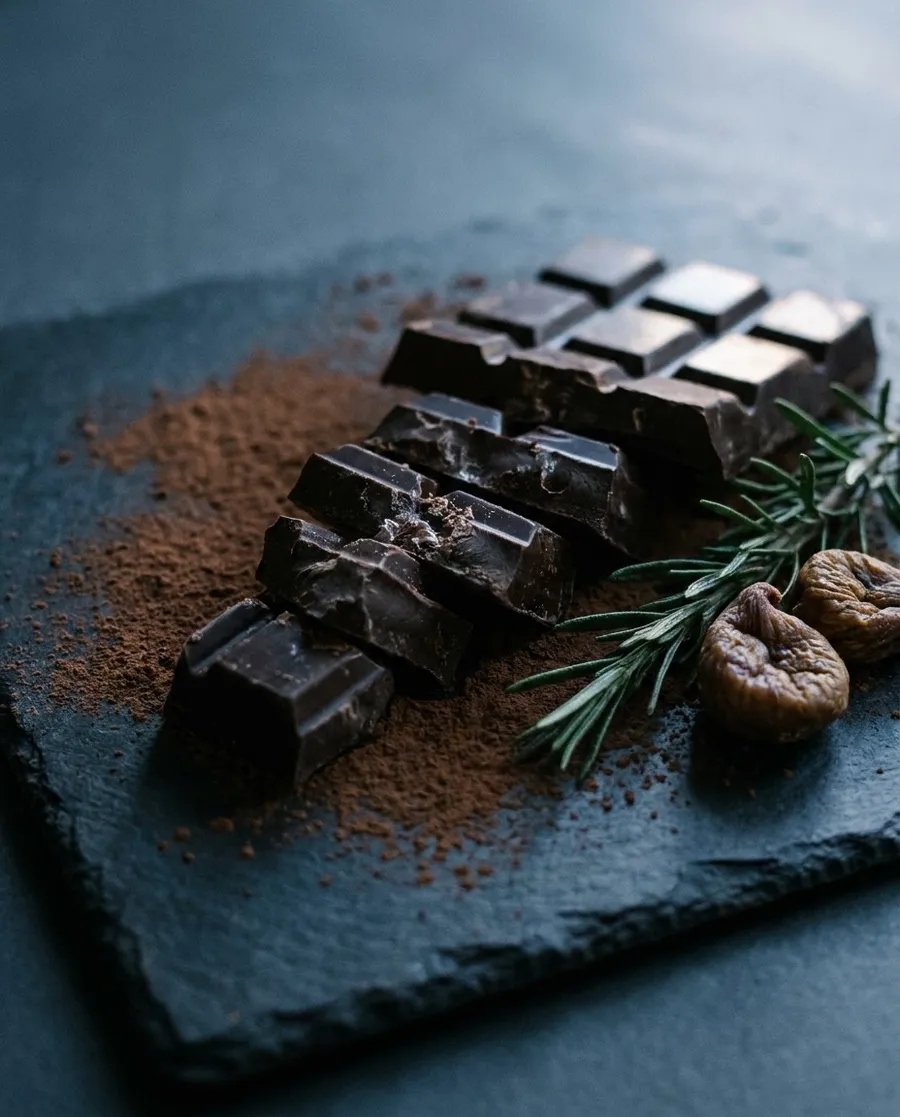
Chocolate needs texture: snapped edges, cocoa dust, the gloss of tempered chocolate.
"A bar of dark chocolate snapped into rough pieces on black slate, a dusting of cocoa powder, two dried figs and a sprig of rosemary beside it, soft side light from the right revealing the snapped edges and the glossy surface, deep shadows, dark and moody food photography."
Bakery and bread
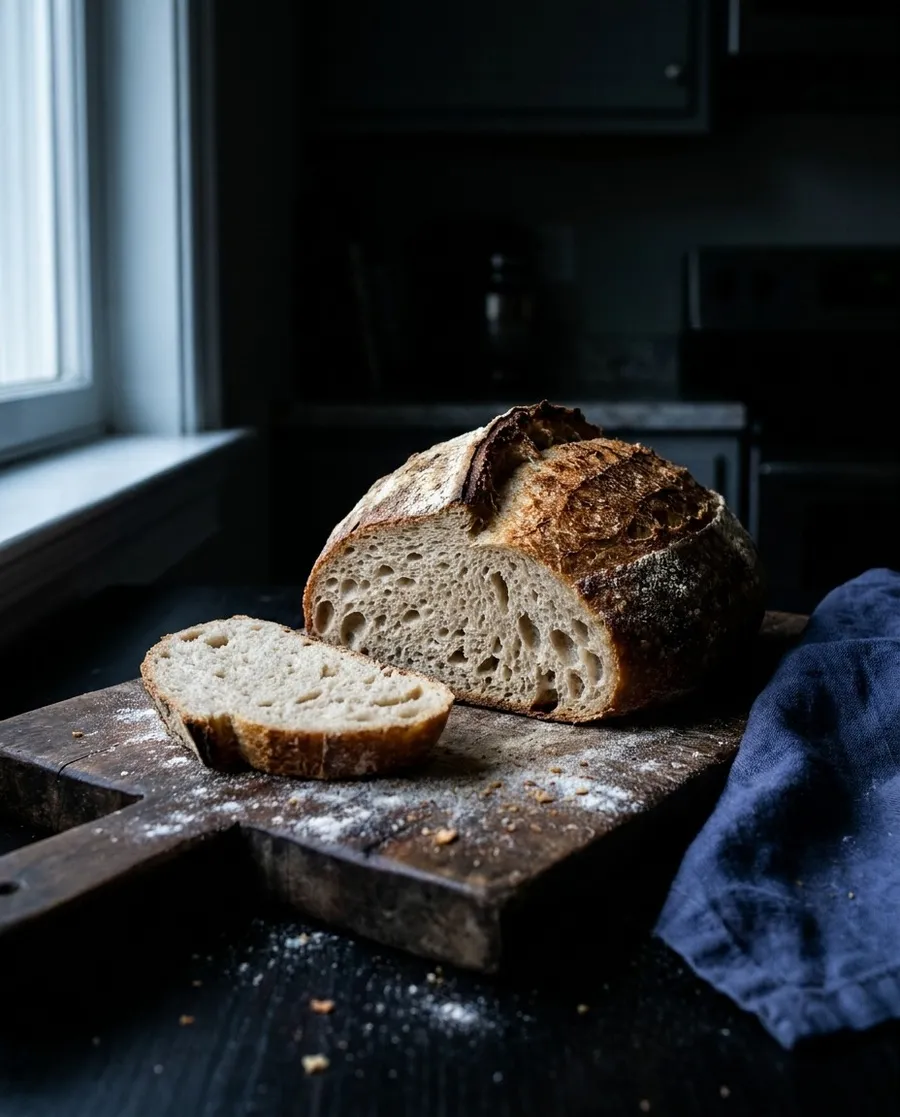
Bread is one of the strongest subjects for the style, because side light shows every crack in the crust.
"A rustic sourdough loaf with a deep golden crust, one slice cut and lying beside it, on a floured dark wooden board, soft window light from the left raking across the crust, scattered flour and crumbs, a crumpled linen cloth, the background in deep shadow, dark and moody food photography."
For pastries, ask for a close-up and a shallow depth of field so the layers show.
Restaurants and plated dishes
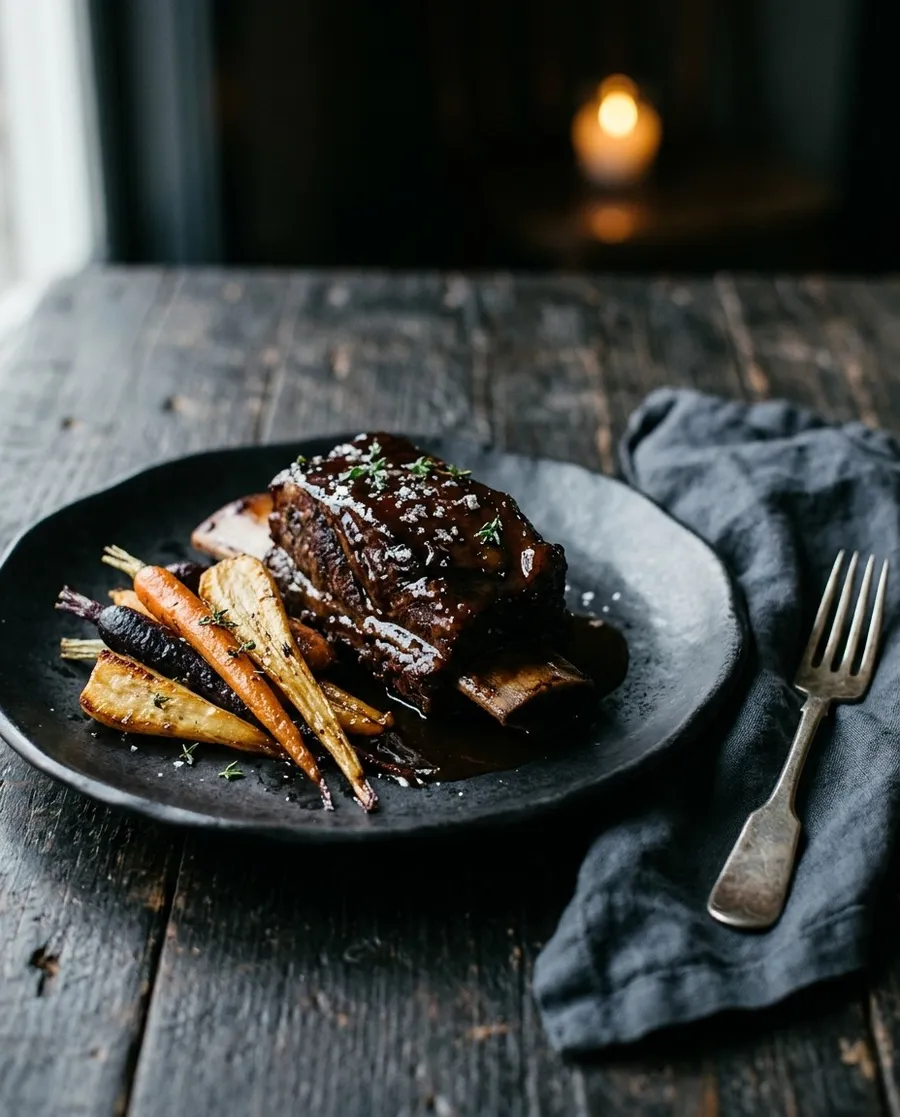
For restaurant menus and social posts, the dish needs to stay appetizing in low light. Ask for a highlight on the sauce or the protein so the dish has a focal point.
"A plated dish of braised short rib with dark glossy jus and roasted root vegetables on a matte black ceramic plate, a single soft light from the upper left creating a highlight on the jus, a dark linen napkin and an old fork beside the plate, warm candlelight in the far background, dark and moody restaurant food photography."
Seasonal and Halloween products
The dark style is the easiest way to give a food brand a Halloween or autumn look without cartoon ghosts or orange packaging. Use seasonal ingredients and a candlelit mood instead of decorations.
"A slice of dark chocolate cake with blackberries and a drizzle of deep red berry sauce on a black ceramic plate, dried autumn leaves and a guttering candle beside it, soft candlelight from the right, deep shadows, rich and slightly gothic mood, dark and moody food photography."
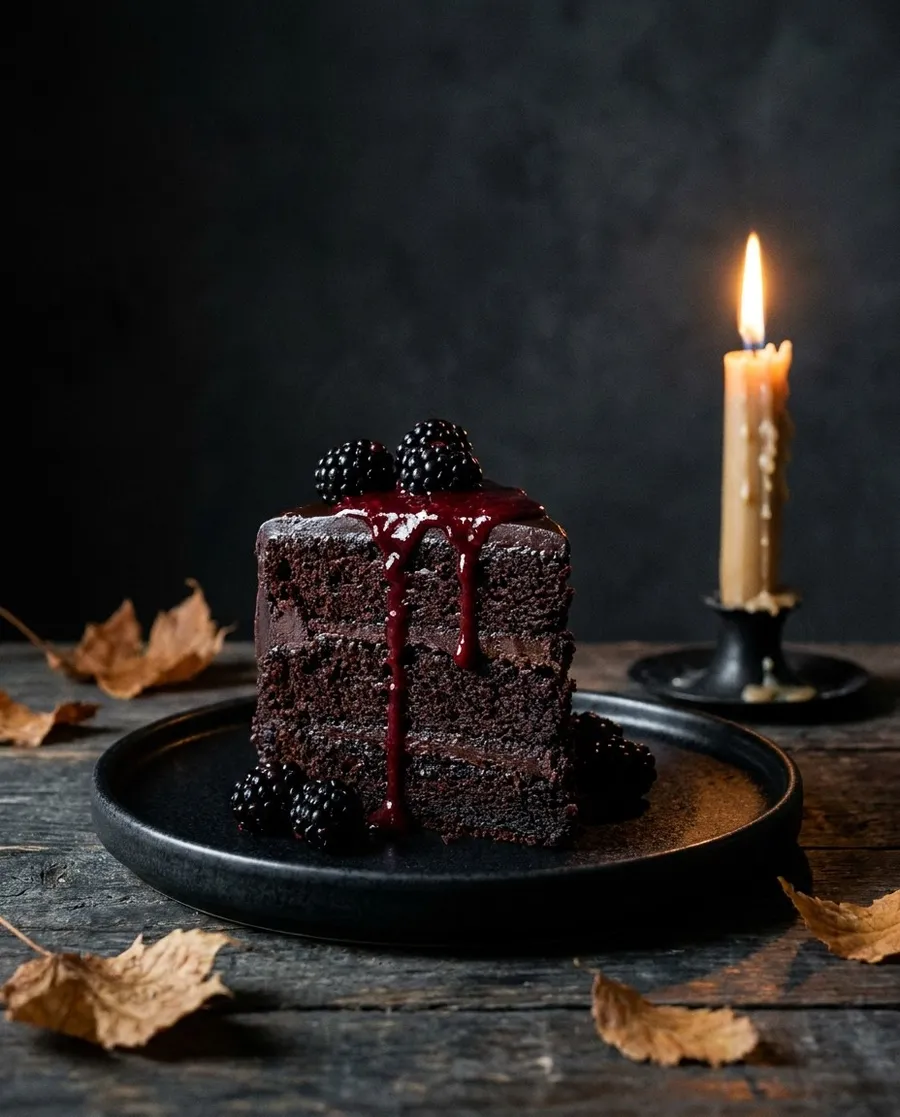
Other seasonal directions: spiced coffee with a cinnamon stick and smoke from a blown-out candle, a pumpkin soup in a black bowl with no pumpkin in sight, or a bakery window at night lit from inside.
How to Create Dark Food Photos With AI, Step by Step
1. Start from your real product when it matters
For packaged goods, like a chocolate bar, a coffee bag, or a bottled sauce, attach a photo of the product as a reference in Create image so the model works from the real packaging. Before the image goes on a menu or into an ad, compare the label, logo, and colors against the original. For dishes and generic ingredients, a prompt alone is enough, which is how an AI food generator covers a whole menu quickly.
2. Write the four ingredients
Describe the light direction, the surface, the palette, and two or three props. Add the food last, in as much detail as you can, such as the crust, the sauce, the steam.
3. Generate a batch
Raise the batch size with the + button, anywhere from 1 to 16 images, to compare light angles and compositions in one run. Small differences in where the highlight lands change how appetizing a dish looks.
4. Relight existing menu photos
If you already have bright, flat food photos, the Relight Action adds one directional light while keeping the dish. Set the light to the side, choose a warm color, and keep the intensity moderate.
5. Lock the look for the whole menu
Attach your best image as a reference when you generate the next dish, so every item on the menu shares the same light and palette. For a look you'll reuse season after season, save it as a Lighting or Style Element and call it by name.
6. Adapt for every placement
Resize for menus, delivery apps, Instagram, and in-store screens, then upscale hero images for print.
Keeping Food Appetizing in the Dark
Dark images can make food look unappetizing if the light misses the dish. The rule that matters most is to light the food, not the scene. The brightest part of the image should be the food itself; if the props or the background are brighter, the eye goes there first.
Keep the light warm or neutral. Cool, blue light makes most food look stale, while warmth keeps bread golden and meat rich. Ask for moisture too: gloss on sauces, steam on hot drinks, condensation on cold ones. Moisture is what signals freshness.
The background can go black, but the food should keep detail in its darker parts, so don't let the shadows on the dish crush to solid black. And leave the crumbs and drips in. A spotless plate in a dark scene looks like a render; small imperfections make it believable.
When Dark and Moody Is the Wrong Choice
The style is not a fit for every food brand or placement.
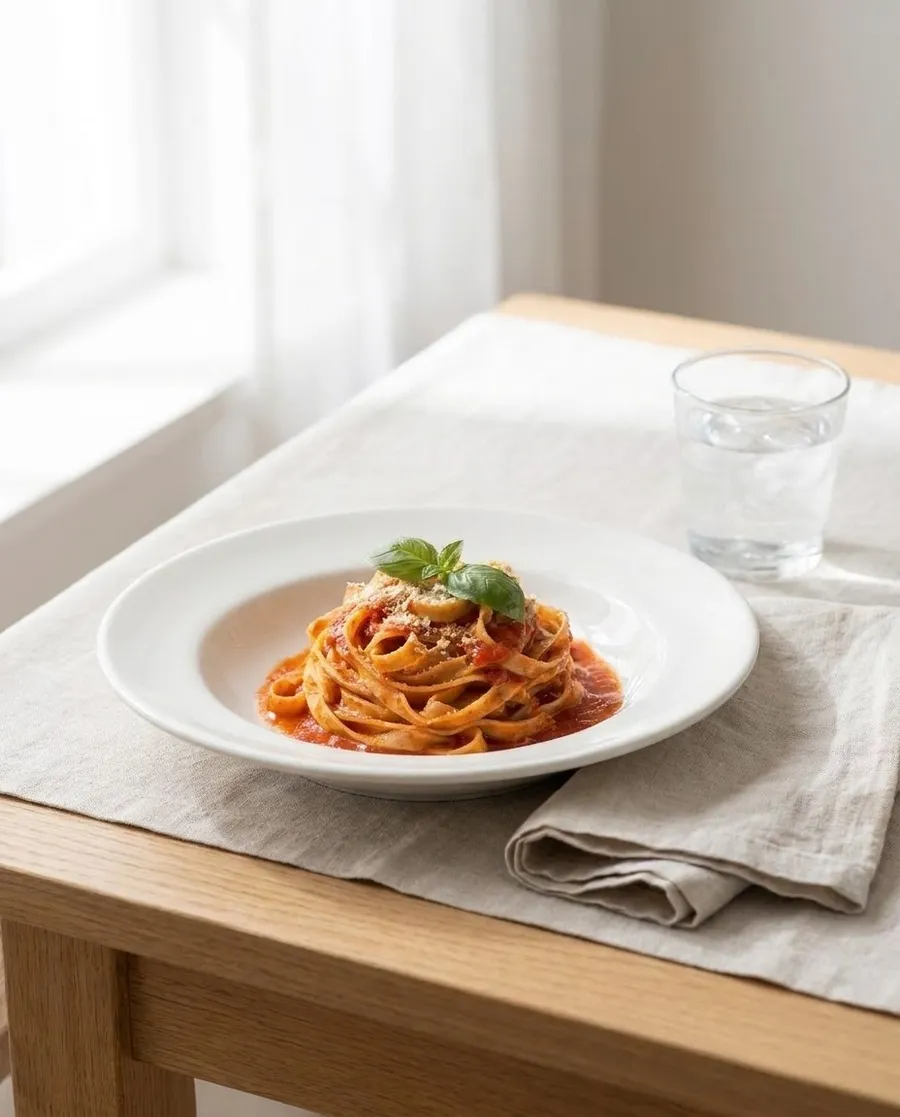
Bright and airy
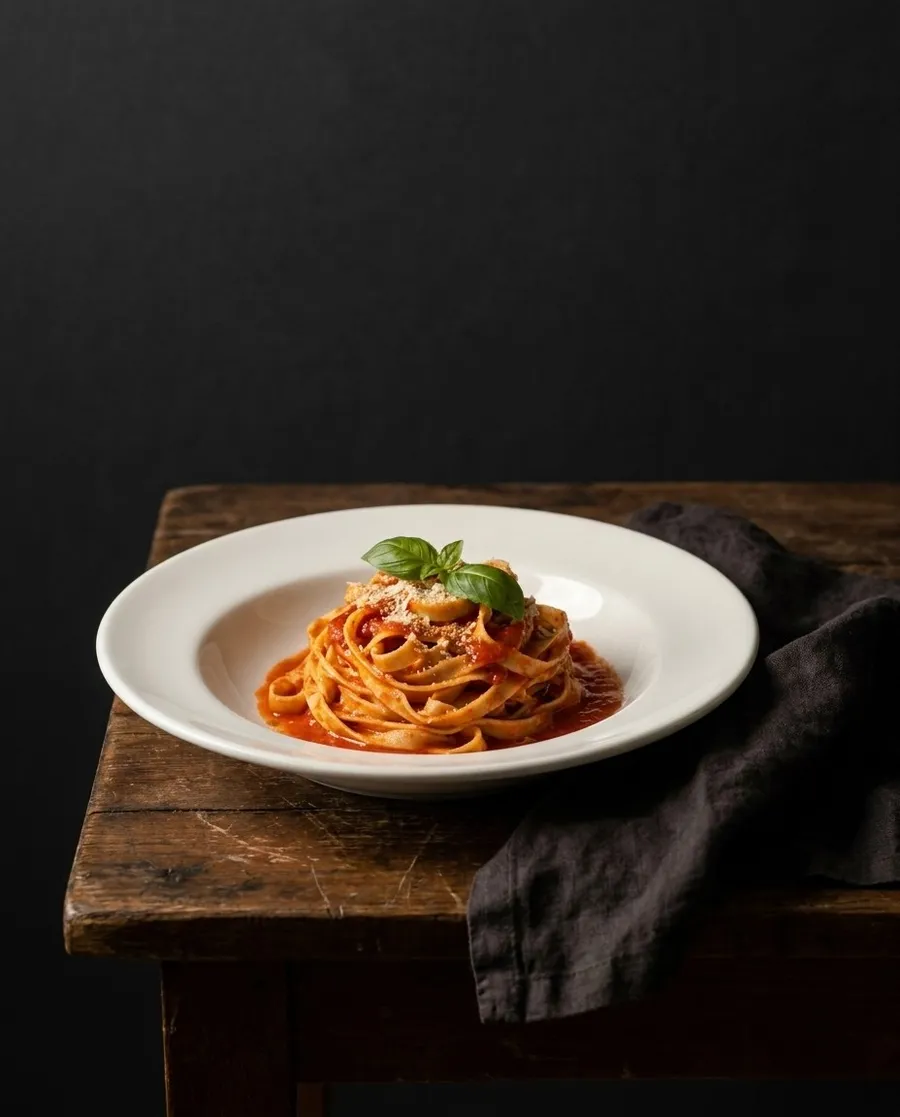
Dark and moody
Use dark and moody for | Prefer bright and airy for |
Coffee, chocolate, wine, bread, braised dishes | Salads, smoothies, breakfast, kids' food |
Premium and artisan positioning | Health and freshness positioning |
Menus, packaging, seasonal campaigns | Small delivery app thumbnails |
Evening and autumn or winter campaigns | Spring and summer campaigns |
Dark images also lose detail at very small sizes. On delivery apps, where a dish appears as a small thumbnail, a brighter version of the same dish usually performs better. A practical approach is to generate both and use each where it fits.
The Bottom Line
Dark and moody food photography comes down to four choices: one soft side light or backlight, a dark matte surface, a deep palette with one warm accent, and a few imperfect props. Describe those four in a prompt, attach a reference when the packaging must stay accurate, generate a batch, and reuse the winning image as a reference so a whole menu or product range matches. It suits coffee, chocolate, bread, and restaurant dishes, and gives food brands a seasonal look without seasonal clichés.
Commercial rights are included, subject to our terms and applicable third-party rights.
Create dark and moody food photos in getimg.ai
Frequently Asked Questions
Dark and moody food photography is a style that uses a dark background, a single soft light source, and deep shadows to make food look rich and textured. The light usually comes from the side or slightly behind, like a window, and the rest of the scene fades into darkness. It is common for coffee, chocolate, bread, wine, and restaurant dishes.
One soft, diffused light from the side or slightly behind the food. Side light reveals texture, such as bread crust or chocolate edges, while backlight makes steam, syrup, and drinks glow. There is little or no fill light, so shadows stay deep. Front light and hard, direct light are usually avoided, because they flatten the food or make it look dry.
Describe four things: the light direction ("soft window light from the left"), the surface ("dark weathered wood"), the palette ("deep brown and black tones"), and two or three props ("a crumpled linen napkin, scattered crumbs"). Then describe the food in detail, including texture, gloss, or steam. End with "dark and moody food photography" to set the overall style.
Mostly, yes, and models keep getting better at it. Attach a clear, evenly lit photo of the product as a reference image, and the model uses its packaging, label, and color when it places the product into the new scene. Small details can still shift, especially fine print, logos, and exact brand colors, so compare every result with the real product before you publish it. For a full product range, a reusable product reference helps keep the products consistent across images.
It works well for premium, artisan, and seasonal positioning, such as coffee roasters, bakeries, chocolatiers, wine bars, and restaurant menus. It is also one of the easiest ways to run a Halloween or autumn food campaign without cartoon ghosts or orange packaging: dark chocolate, blackberries, spiced coffee, and candlelight read as seasonal on their own. It works less well for health-focused brands and for small delivery app thumbnails, where dark images lose detail. Many brands use the dark style for campaigns and packaging, and a brighter style for delivery apps.
Relight the existing photo instead of darkening it. Lowering exposure makes the whole image muddy, while relighting adds one directional light and lets the rest fall into shadow, which is the actual look of the style. Set the light from the side, choose a warm color, and use a moderate intensity so the food still looks fresh.
Related Articles