Star Images Generator
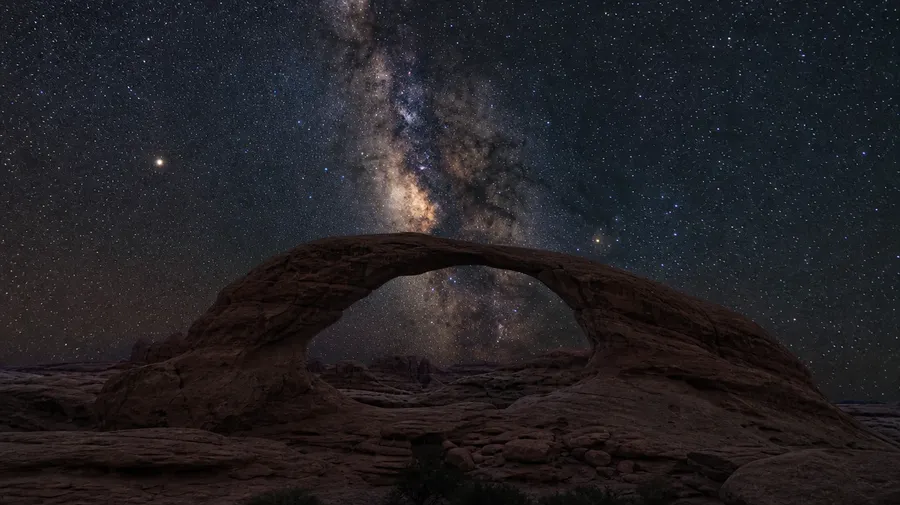
Star pictures and star images at every scale: a Milky Way galactic core over a desert arch, star trails circling Polaris above a lone fir, Orion rising over a snowy mountain ridge, a meteor streak across the Pleiades, the Milky Way's dust lanes over an alpine lake. Commercial rights on every paid plan.
Wide-field nightscapes and deep-sky details on 16+ image models.
Auto mode picks the one that matches your prompt.


How to generate custom star images with getimg.ai
A star photograph balances sky and foreground. Three steps name the scale, the subject, and the anchor.
1. Name the subject and the foreground
Open getimg.ai and describe the sky subject, the foreground anchor, and the exposure feel. A simple line gives a baseline; specify constellation, lunar phase, or light pollution level when you want exact control over those details.
2. Generate and compare
Sixteen nightscape takes per prompt. Across the takes, check star-color accuracy, Milky Way dust-lane detail, foreground-to-sky exposure balance, and whether bright stars retain their points without bleeding. Pick the version that lands.
3. Swap a detail
A first run picks one valid reading of your prompt. If you'd rather see Orion rising in winter sky instead of the summer Milky Way core, a lighthouse foreground instead of a desert arch, or a star-trail circling Polaris instead of pin-sharp wide-field, name the swap and run again. Several changes fit one prompt. Download the version you want to ship.
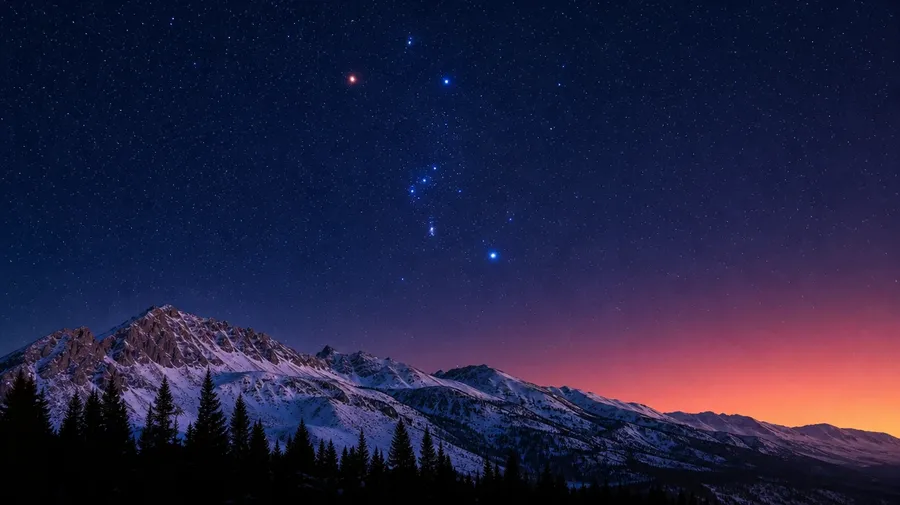
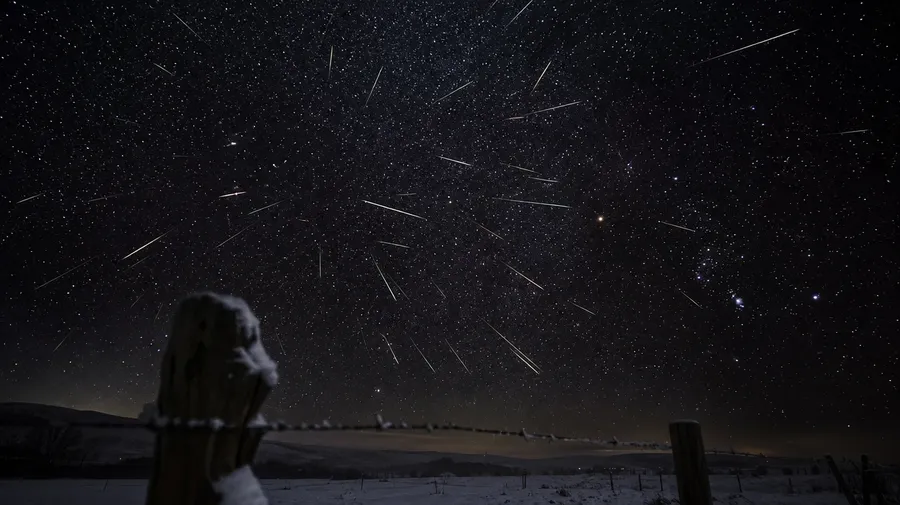
orion rising over a snowy mountain ridge in winter sky, single-shot exposure, foreground silhouette
Sky subject, foreground, and the dark above both
Working astrophotography covers Milky Way galactic core shots, constellation wide-fields, star-trail circles, and meteor-shower captures. Each subject pairs with a different foreground choice.
Milky Way, Orion, star trails, meteors
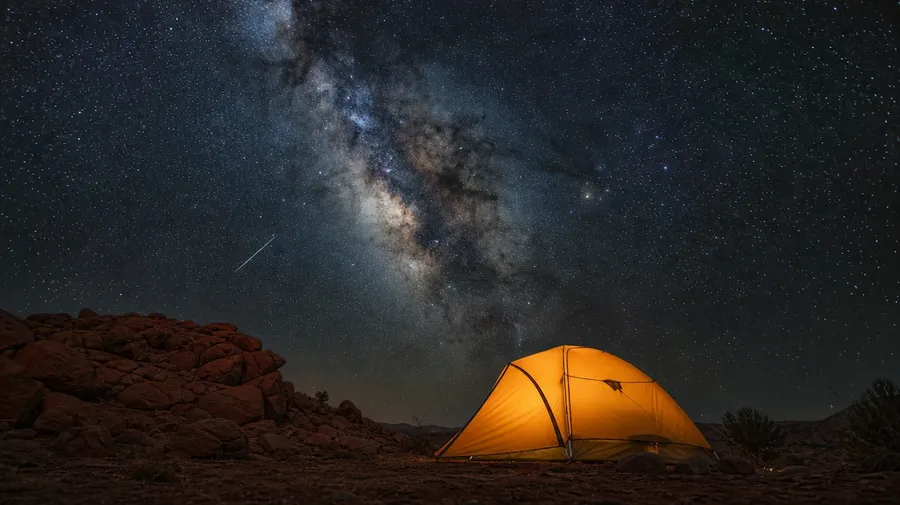
Across the subjects astrophotographers actually shoot: the Milky Way galactic core over a desert arch in summer, Orion above a snowy mountain ridge in winter, star trails circling Polaris above a lone fir, a Perseid meteor streaking across the Pleiades, the Andromeda Galaxy in a wide-field nightscape. Each subject sets a different composition.
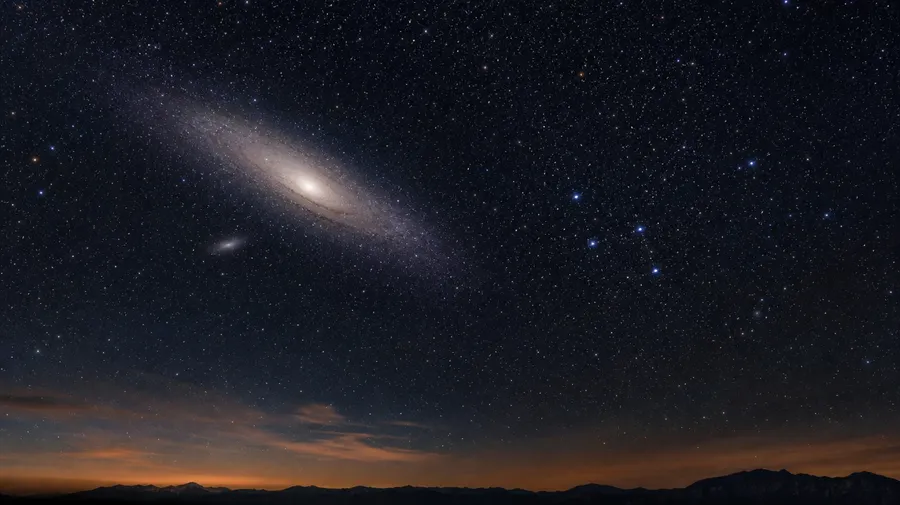
The ground under the sky
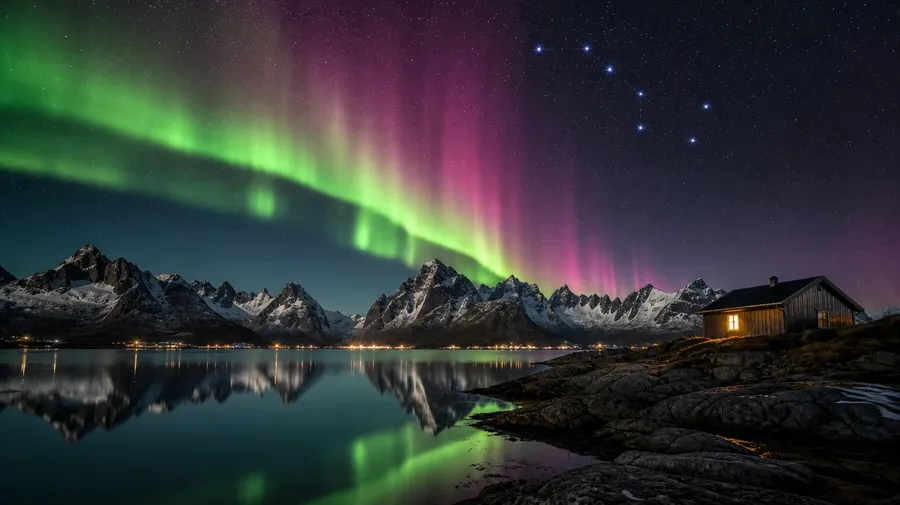
A star photograph needs an anchor on earth. A red-rock desert arch framing the Milky Way core, a lone fir on a high-altitude ridge under star trails, a Norwegian coastline with aurora bands above, a lighthouse with the Pleiades rising, a tented campsite glowing under Orion. Each anchor changes the mood.
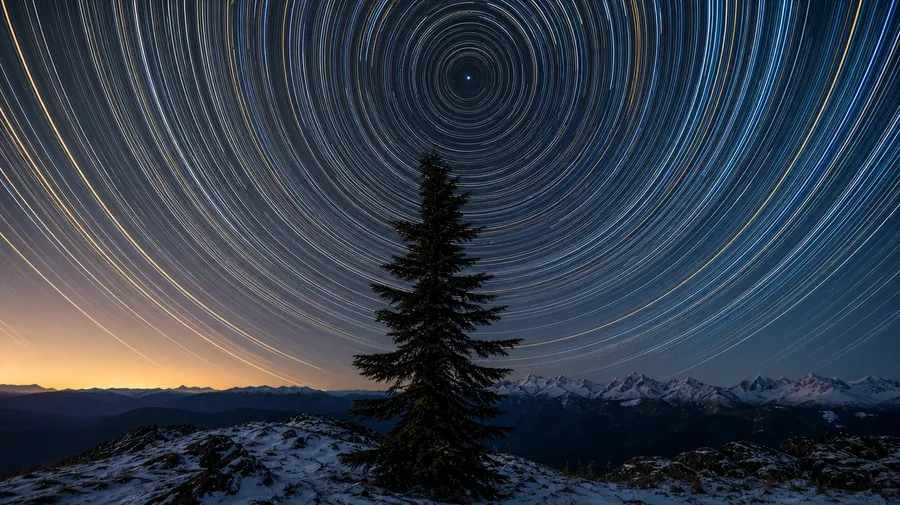
Beyond the same Milky Way arch
Stock astrophotography stops at the same Milky Way arch over an obvious sand dune. Real shoots cover star trails circling Polaris above a lone fir, a meteor streak across a winter Orion, the Andromeda Galaxy in a tilted-field composition, an aurora curtain bending under the Big Dipper. Off-the-shelf star pictures miss the rare moments.
Frequently Asked Questions
Yes. Name the subject, the foreground, the season, and the exposure feel. The Milky Way galactic core over a Utah red-rock arch in late August reads very differently from Orion rising over a snowy Sierra ridge in January, star trails circling Polaris above a lone fir in autumn, an aurora curtain over a Norwegian fjord under the Big Dipper, or a Perseid meteor shower streaking across a winter sky. The AI handles star-color accuracy, Milky Way dust-lane detail, and the way the foreground exposure balances against the sky. Generate up to 16 at a time, compare the takes, pick the version that lands.
Yes, when the prompt names them. A 30-second single-shot reads differently from a stacked composite, a Bortle 1 dark sky from a Bortle 4 outskirts shoot, a winter Milky Way arch from a summer galactic-core overhead. Specify the exposure feel, the dark-sky class, the lunar phase, and any atmospheric conditions, and the AI handles the star-color hierarchy, the Milky Way detail, and the foreground-to-sky exposure balance.
Yes. Save the dark-sky class, the exposure style, the color palette, and the foreground style as a custom Element and reference it with @NightLook across new prompts. The Element carries star-color rendering, atmospheric clarity, and tonal palette forward, so a Milky Way arch, a star-trail circle, and a meteor-shower wide-field all read as one body of work. Useful for a print portfolio, an editorial photo essay, and a tourism-board campaign for a dark-sky destination.
Name the subject and the conditions. An aurora curtain bending in green-and-magenta bands over a Norwegian fjord at Kp 6, a Jupiter-Saturn conjunction setting behind a desert mesa at twilight, a total solar eclipse with the corona's filaments visible above a saguaro silhouette, a transit of Venus across the sun's disk, a thin lunar crescent beside Mercury just after sunset: each carries its own cues that the AI honors when the prompt spells them out.
Yes. Every paid plan covers commercial use across ads, social, web, print, packaging, and presentations. Tourism-board dark-sky destination marketing, astronomy-publication editorial, observatory and planetarium branding, outdoor-gear campaign imagery, science-textbook illustrations, gallery print sales, and editorial features all qualify under the same license, alongside every other category of AI stock photos.
Yes. Different categories run on the same prompt approach. Name the subject, the scale, and the lighting context, and the same logic that produces space photography produces star images: swap a satellite orbiting Earth for a Milky Way arch over a desert rock formation, a James Webb deep-field galaxy cluster for a wide-field constellation photograph, an astronaut on a spacewalk for a lone astrophotographer beside a tracking mount. A multi-category campaign runs through one prompt box.
As specific as you want. A simple line like "the Milky Way over a desert arch at new moon" produces a usable baseline; the AI fills in the typical details (the galactic core position, the dust-lane structure, the warm rock against the cool sky). Add specifics for the parts that matter to the campaign: a particular season, a constellation, a foreground subject, an exposure style, a dark-sky class. The AI honors named details without overriding the rest. Each star stock image gets the named details right.
Skies that survive a 100% crop.
Pick the subject, the foreground, the exposure feel, and the season. The AI delivers star photography that reads at gallery print size, and Elements keep the dark-sky palette consistent across an entire night-sky series.