AI Stock Peacock Images Generator
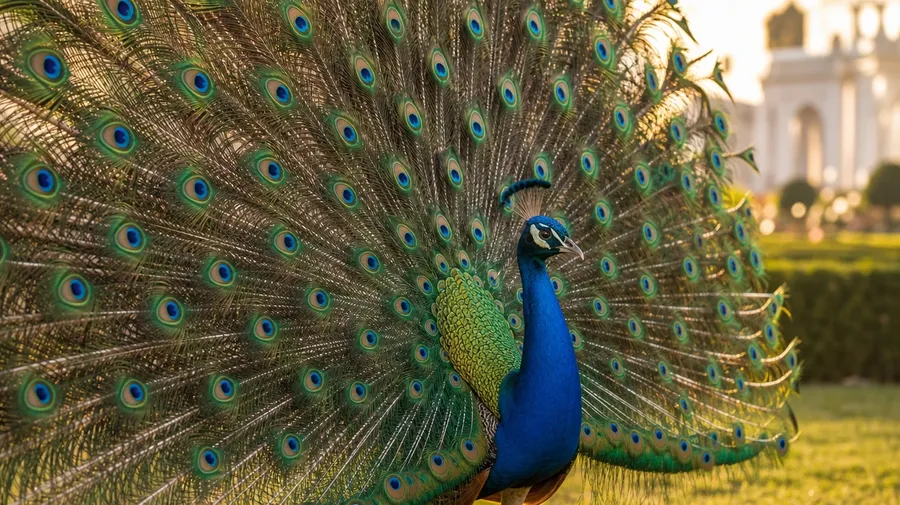
What does the brief actually need a peacock to do? Type the species, the behavior, and the setting, and generate peacock images that match: an Indian blue fanning the train at golden hour, a Congo peacock foraging in dense rainforest, a peahen leading chicks through fallen petals. Commercial rights on every paid plan.
All the top image models, one prompt box.
You don't need to know the specs: Auto mode will select the best one for the task.


How to generate custom peacock images with getimg.ai
Name the species, the train state, and the moment, and the prompt fills in the rest.
1. Set the scene
Open the Content Generator and describe the peacock scene: the species, the train state, the setting. A simple prompt works; name the eye-spot pattern, the light, or the courtship phase to control the rest.
2. Pick the keeper
Run a batch of one, two, four, eight, or sixteen and read the results for train fan symmetry, eye-spot saturation, posture, and the way iridescence catches the light. Pick the version that lands.
3. Edit a cue
A first run picks one of many valid peacock interpretations from your prompt. If you'd rather see a green peacock instead of the Indian blue the model chose, or a half-folded train instead of full display, name the change and run again. Several edits fit one prompt; download when it lands.
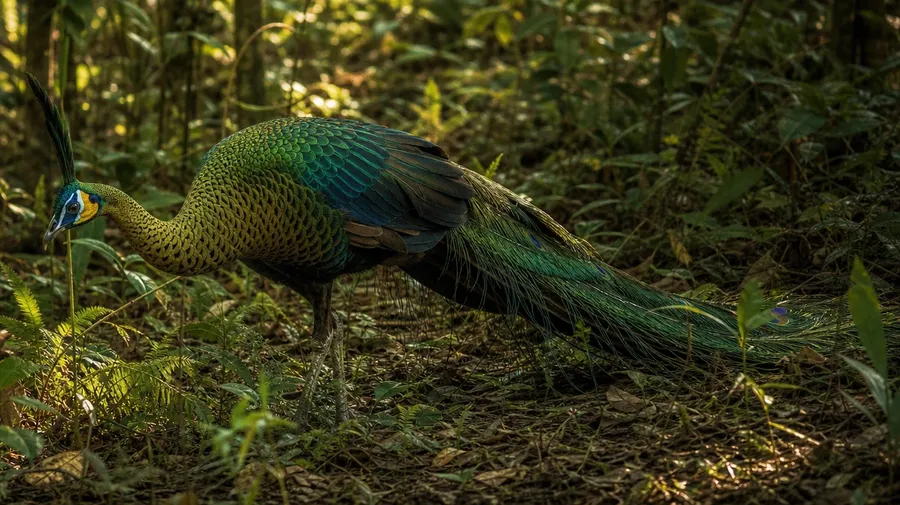
a green peacock foraging in low rainforest understory at dawn, dappled light, neck feathers glinting
Behind the train fan
Real briefs span species, behavior, and the moments outside the courtship pose.
From Indian blue to Congo peacock
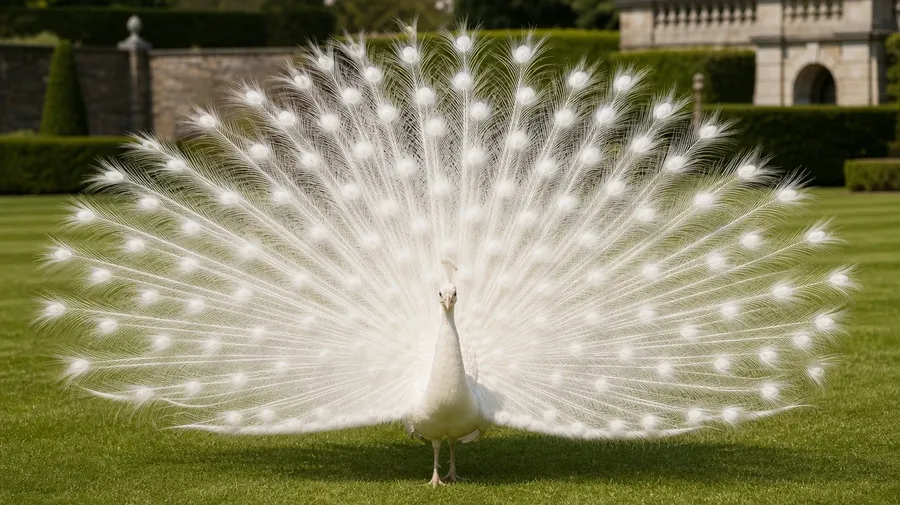
Generate beyond the Indian blue: a green peacock with metallic neck in Java rainforest, a Congo peacock with rufous crest in African forest, a white leucistic peacock on an English estate lawn, a peahen leading chicks through Indian leaf litter. Each species carries its own pattern and palette.
Molting, calling, dust bathing
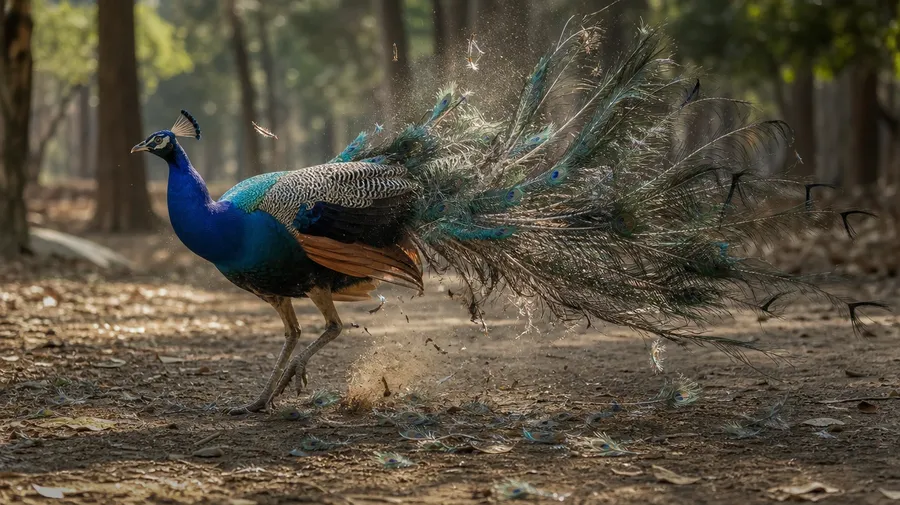
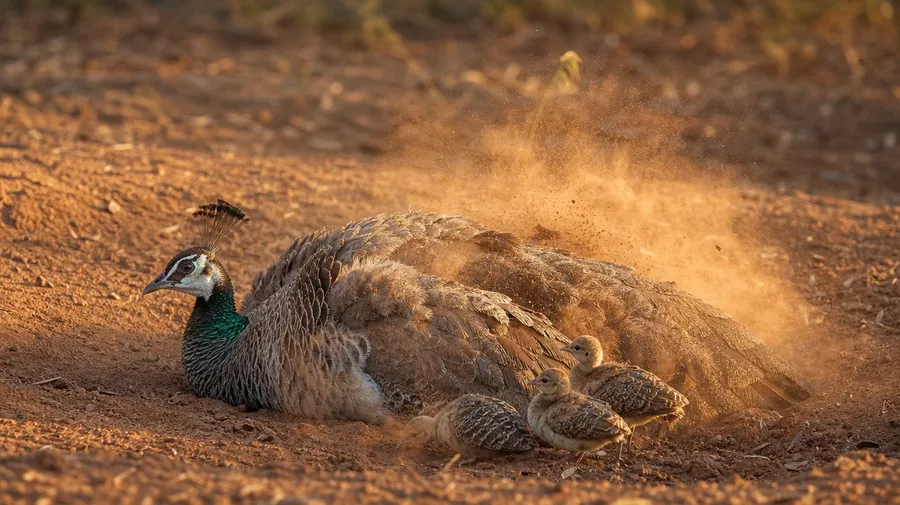
Stock peacocks freeze in courtship display. Real briefs span more behavior: a male shaking train feathers in late-summer molt, two males rivalry-calling at dawn, a peahen dust-bathing in dry red earth, juveniles foraging on fallen mulberries, a male flying short across a moat. Same prompt, different moment.
Outside the zoo aviary
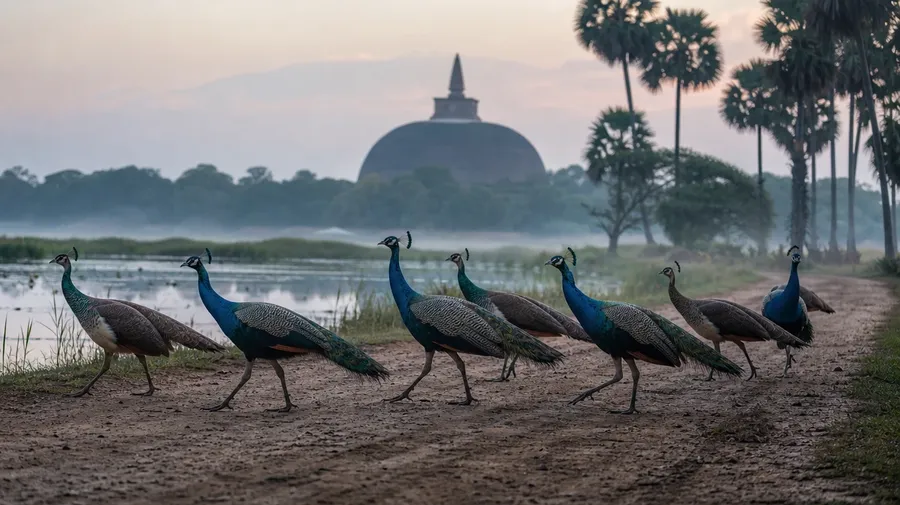
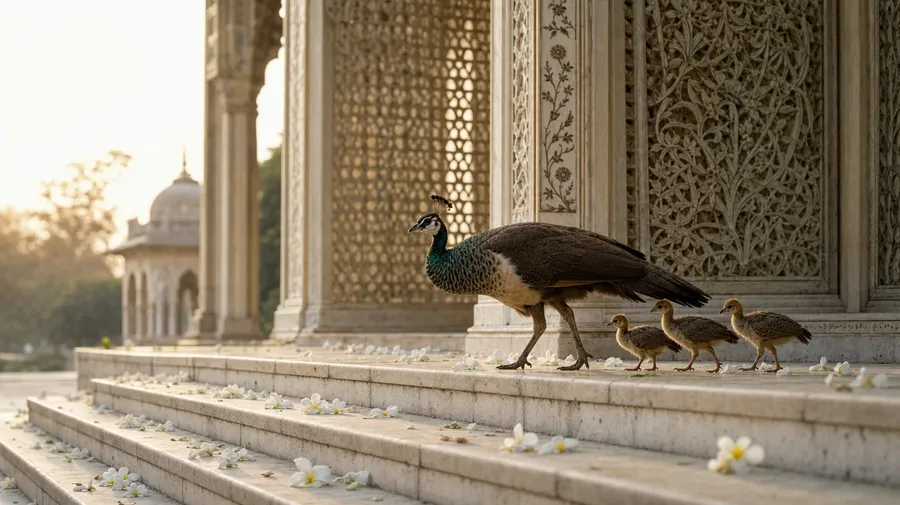
Capture peacocks in real settings: a male in the dappled understory of an Indian sal forest, a peahen leading chicks across Mughal garden steps, a white leucistic on an English country estate lawn, a flock crossing a dirt road near a Sri Lankan tank. Each setting carries its own light.
Frequently Asked Questions
Yes. Name the species and the location in the prompt. An Indian blue (Pavo cristatus) fanning the train at golden hour reads very differently from a green peacock (Pavo muticus) foraging in a Java rainforest, a Congo peacock (Afropavo congensis) with a rufous crest in dense African forest, or a white leucistic peacock on an English country lawn. The model handles the plumage, the train length, and the eye-spot saturation. Generate up to 16 at a time, compare the species cues, pick the version that lands.
Yes, when the prompt names them. Indian blue iridescence reads differently from green peacock metallic gold-and-bronze, and an Indian blue's train carries roughly two hundred eye-spots while juveniles and males in molt show many fewer. Specify the species, the train state, the molt phase, and the angle of light, and the model handles the way iridescence shifts with viewing direction.
Yes. Specify palette, contrast, light direction, and grain in the prompt: golden-hour estate-grade documentary, monsoon-soaked forest understory, blue-hour palace garden, harsh noon glare on a manicured lawn. For multiple scenes in one register, save the look as a custom Element and reuse it across prompts. The Element carries treatment between species so the campaign reads as one body of work.
Name the moment and the context. A male shaking train feathers in late-summer molt, two males rivalry-calling at dawn, a peahen dust-bathing in dry red earth, juveniles foraging on fallen mulberries, a male in short low flight across a moat: each carries different cues that the AI honors when you spell them out in the prompt.
Yes. Every paid plan covers commercial use across ads, social, web, print, packaging, and presentations. Hospitality brands, garden-and-estate publishers, conservation NGOs, fashion and beauty editorials, zoo and aquarium media, and lifestyle outlets all qualify under the same license, the same way every other subject does across AI stock photography.
Yes. Peacocks share visual DNA with butterflies, both built around iridescent color and eye-spot patterns. The same approach that produces butterfly images produces peacocks: name the species, the setting, and the light, and the same logic carries across. A peacock fan in a garden alongside a peacock butterfly on lavender reads as one body of work.
As specific as you want. A simple prompt like "a peacock fanning its train at golden hour" produces a usable baseline; the AI fills in the typical details (the eye-spot pattern, the iridescent neck, the warm late light). Add specifics for the parts that matter to your brief: a particular species, a specific habitat, a courtship phase, a peahen at the edge. The model honors named details without overriding the rest.
Generate the exact stock photo you need
Name the species, the behavior, and the setting. Generate custom peacock images for any brief without relying on basic stock.