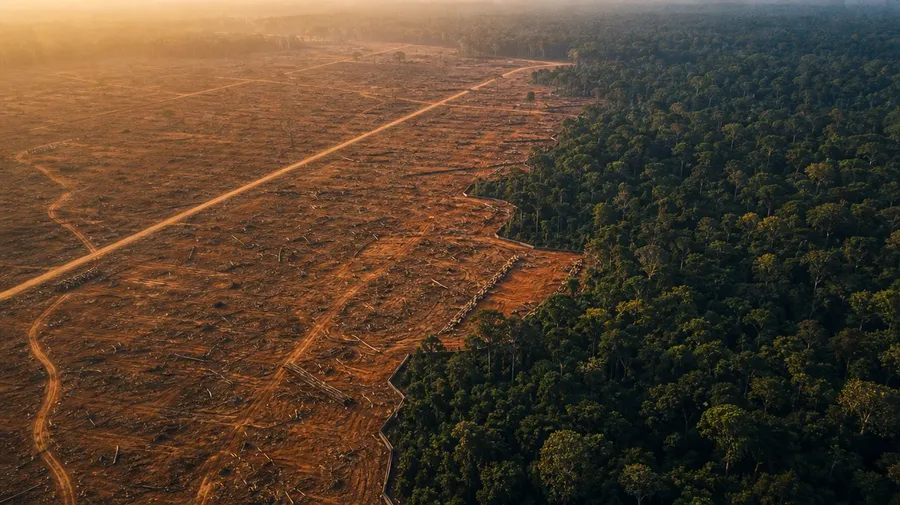
AI Stock Deforestation Images
Slash-and-burn smoke, aerial clear-cut edges, palm-oil rows replacing rainforest, a lone tree in cattle pasture. Generate documentary deforestation photography across Amazon, African Miombo, and more. Commercial rights on every paid plan.
Every leading image model, one subscription.
Auto mode reads your prompt and picks the model that fits.


How to generate custom deforestation images with getimg.ai
Deforestation imagery turns on what's being cleared, how, and where. Three steps name the biome, the driver, and the moment.
1. Name the biome and the driver
Open getimg.ai and name the biome, the driver of clearing, and the framing. A simple line gives a baseline; add time of day, smoke or dust quality, or a lens cue when those details matter.
2. Generate and compare
Sixteen takes at one go. Read each for edge geometry, the smoke or dust falloff, the canopy species at the boundary, and whether the equipment reads as industrial or artisanal. Pick the version that lands.
3. Swap a detail
A first run picks one valid reading of your prompt. If you'd rather see an Indonesian peat-forest scene instead of an Amazon clear-cut, a daytime aerial instead of a dusk wide angle, or a logging-truck haul road instead of a slash-and-burn smoke column, name the swap and run again. Multiple changes fit one prompt. Download the version you want to ship.
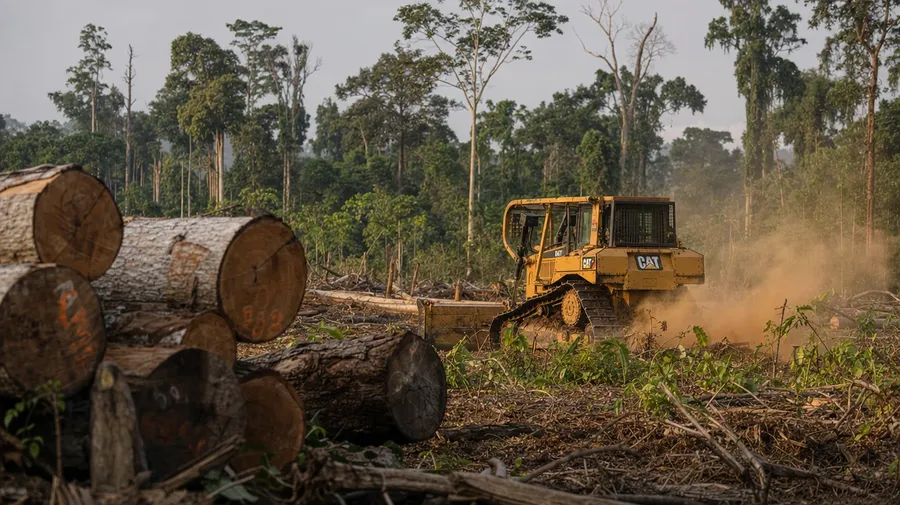
an industrial logging operation in lowland rainforest, bulldozer clearing understory, dry-season dust, late afternoon backlight
Biomes, drivers, and the moments the work documents
Documentary deforestation shoots cover aerial clear-cut edges, slash-and-burn smoke, plantation expansion, and the aftermath the lens lingers on.
Amazon, Indonesian peat, boreal, and Miombo
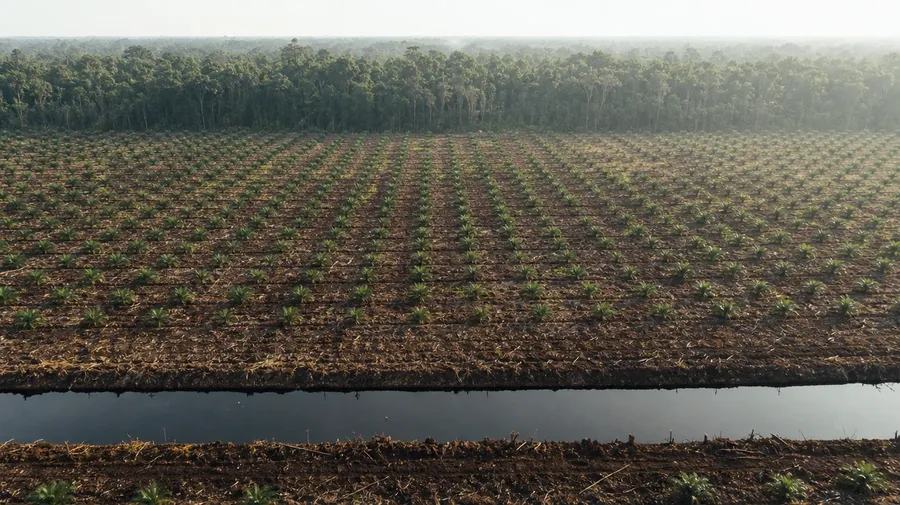
Cover the world's clearing fronts: a smoking slash-and-burn plot at dawn in the Brazilian Cerrado, an aerial palm-oil expansion in lowland Sumatran peat forest, a clear-cut block in Canadian boreal taiga, a charcoal-burning camp in Tanzanian Miombo. Each region reads its own canopy, soil, and equipment.
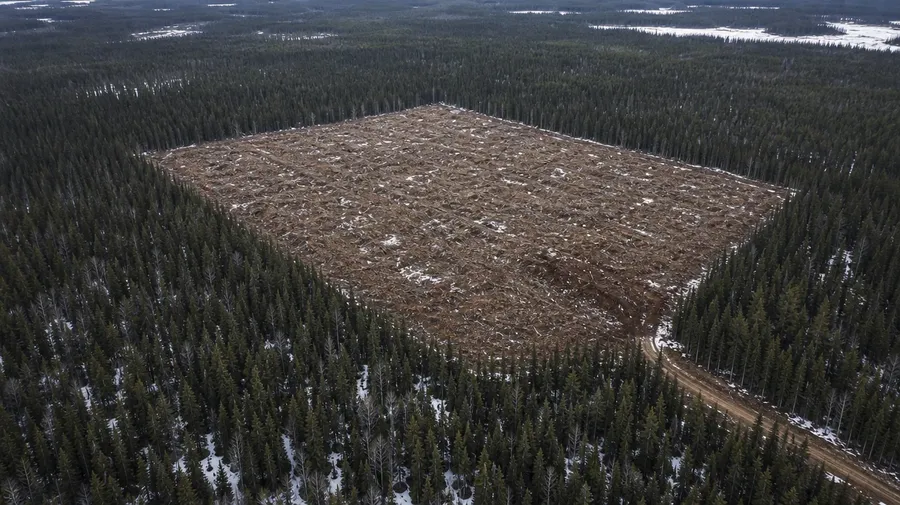
Logging, plantations, ranching, fire
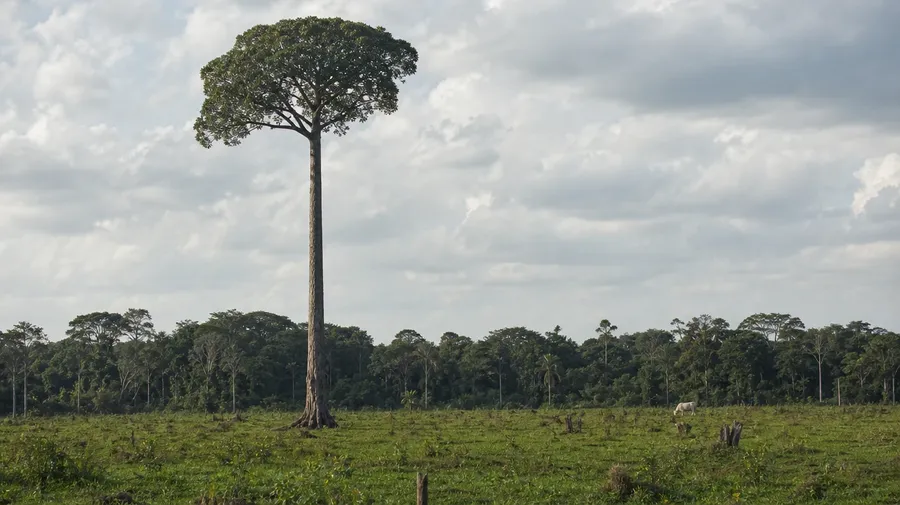
Climate reporting names a driver before a scene. Industrial logging on a haul road, slash-and-burn smoke rising from a freshly cleared plot, palm-oil monoculture rows where rainforest stood the season before, a single Brazil-nut tree standing alone in cattle pasture. Generate the one the story names.
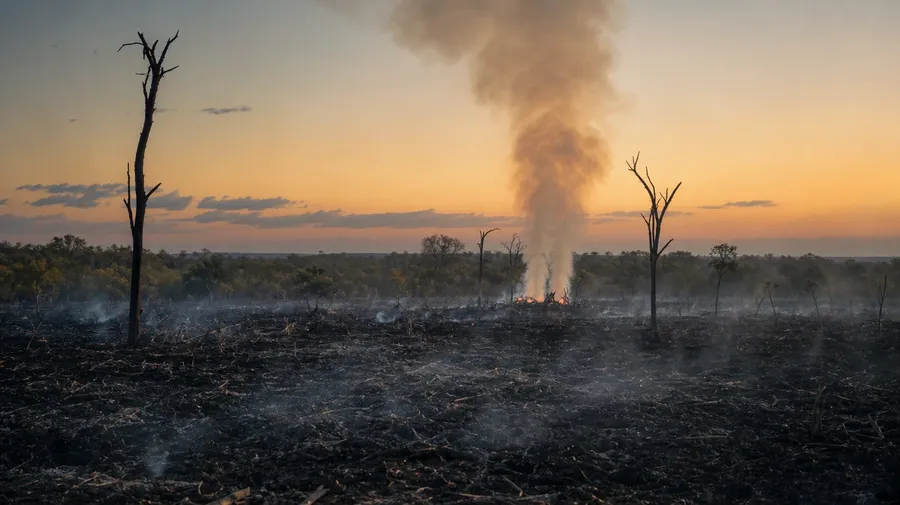
Past the burning-rainforest stock shot
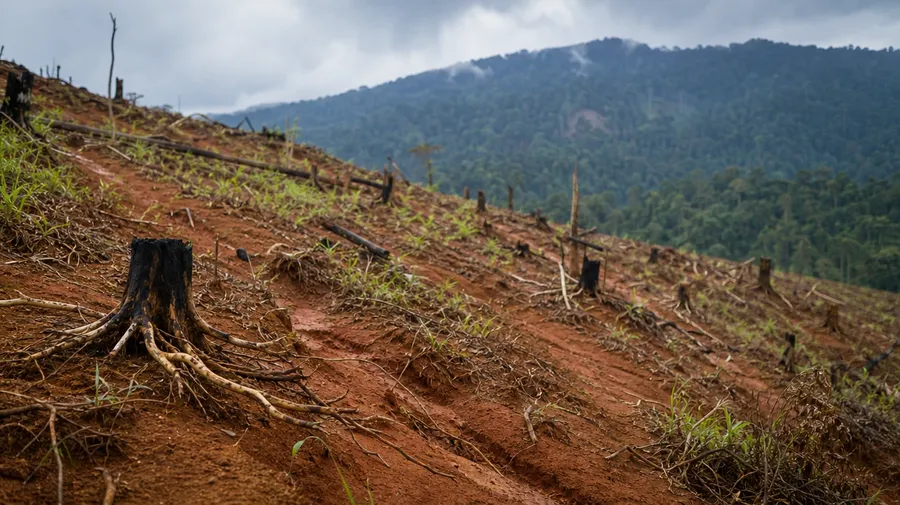
Stock deforestation imagery stops at orange flames against a green canopy. Real shoots cover the quieter editorial moments: eroded red-clay slopes weeks after a clear-cut, a patrol post on an illegal logging road, a sawmill stack of tropical hardwood under tarp, the silent dawn after the fire dies.
Frequently Asked Questions
Yes. Name the biome, the driver, the time of day, and the framing. An aerial wide of a clear-cut boundary in the Brazilian Amazon at dry-season dawn reads very differently from a slash-and-burn smoke column rising from an Indonesian peat-forest plot at noon, a logging-truck haul road through Cameroonian rainforest at dusk, a palm-oil monoculture replacing Sumatran peat forest, or a charcoal-burning camp in a Tanzanian Miombo woodland. The AI handles the canopy species, the soil hue, the smoke or dust falloff, and the architectural cues of the equipment. Generate up to 16 at a time across the same range as every other category of AI stock photos, compare the takes, pick the version that lands.
Yes, when the prompt names them. A Brazil-nut tree's emergent crown reads differently from an oil palm's monoculture row, a freshly burnt slash plot from a months-old recovering field, a tracked logging skidder from a hand-operated chainsaw operation. Specify species, smoke age, equipment scale, and the architectural cues of the operation, and the AI handles the canopy texture, the soil-color shift between dry and wet ground, and the focus separation between the foreground equipment and the background forest, the same realistic photographic rendering used across other documentary categories.
Yes. Save the location, the light direction, and the canopy character as a custom Element and reference it with @AmazonFront across new prompts. The Element carries the soil hue, the edge geometry, and the species at the boundary forward, so an aerial wide shot, a ground-level recovery frame months later, and a post-fire detail close-up all read as the same location. Useful for a long-form feature series, a sustainability annual report, and a multi-touch campaign that needs one consistent place across the funnel.
Name the role, the activity, and the setting. A forest ranger checking a tagged stump on an illegal logging trail, a forestry technician measuring a residual tree in a selectively logged stand, a smallholder farmer preparing a slash-and-burn plot at dawn, a sustainability auditor at a palm-oil mill checkpoint: each carries its own posture and gear cues that the AI honors when the prompt spells them out.
Yes. Every paid plan covers commercial use across editorial, web, print, social, and presentation contexts. Climate-feature lead images, conservation NGO appeals, ESG sustainability reports, corporate supply-chain disclosures, documentary film posters, university course materials, and policy-brief covers all qualify under the same license.
Yes. Different categories run on the same prompt approach. Swap tree photography of a moss-draped kapok buttress for the same kapok left as a 'paid-for' sentinel in a cattle pasture, an unbroken-canopy aerial panorama for an aerial clear-cut boundary, a sun-shaft cathedral grove for a smoke column rising over a freshly burnt plot. A multi-angle feature runs through one prompt box.
As specific as you want. A simple line like "an aerial view of a clear-cut boundary in tropical rainforest" produces a usable baseline; the AI fills in the typical details (the patchwork edge, the red-clay logging roads, the canopy species, the soft morning haze). Add specifics for the parts that matter to the story: a region, a driver, a season, an equipment cue, an editorial moment. The AI honors named details without overriding the rest.
Generate the exact deforestation image you need.
Name the biome, the driver, and the moment of clearing. The AI delivers documentary deforestation photography that matches the reporting, across an Amazon haul road, an Indonesian peat fire, or a boreal clear-cut.