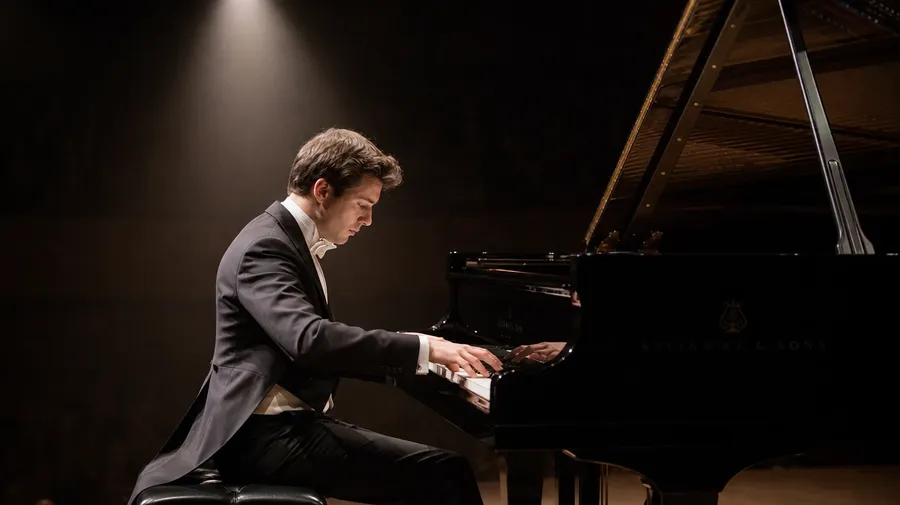
Stock Piano Images Generator
Concert grands, jazz club uprights, practice rooms, key close-ups — generate piano imagery across every instrument, venue, and player. A concert grand pianist in tails mid-recital under a single spotlight on a dark stage, or a jazz pianist at an upright in a dim club leaning into a low chord. Commercial rights on every paid plan.
Every leading image model, one subscription.
Auto mode reads each prompt and picks the model fits your prompt best.


How to generate custom piano images with getimg.ai
What sells a piano photo is the instrument, the player, and what's on the rack. Name each and the AI delivers a real performance moment, not a polished publicity smile in front of a closed lid.
1. Name the instrument, the player, and the venue
Open getimg.ai and describe the scene: the instrument (grand, upright, antique), the player, the venue, and the moment. A simple line gives a baseline; specify lid position, attire, or sheet music when you want exact control.
2. Generate and compare
Sixteen takes at one go. Read each for hand and finger position on the keys, instrument realism (grand vs upright vs antique), venue lighting, and how the surrounding space reads as a real hall. Pick the version that lands.
3. Swap a detail
A first run picks one valid reading of your prompt. If you'd rather see an antique upright instead of a concert grand, a jazz pianist at midnight instead of a recital pianist, a child's first lesson instead of a competition finalist, or sheet music instead of memorized, name the swap and run again. Several changes fit one prompt. Download the version you want to ship.
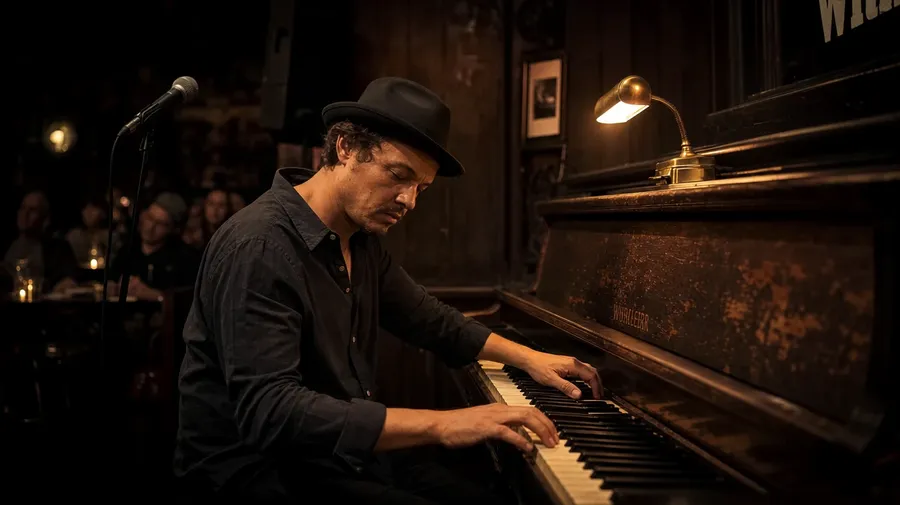
a jazz pianist at an upright in a dim club leaning into a low chord, single spotlight, mic
Instrument, player, and what's on the rack
Working piano shoots span concert-hall recitals, dim jazz-club sets, sunlit conservatory practice, and intimate key-level close-ups. Each instrument and venue calls for its own lighting, attire, and hand position.
Grand, upright, antique, close-up
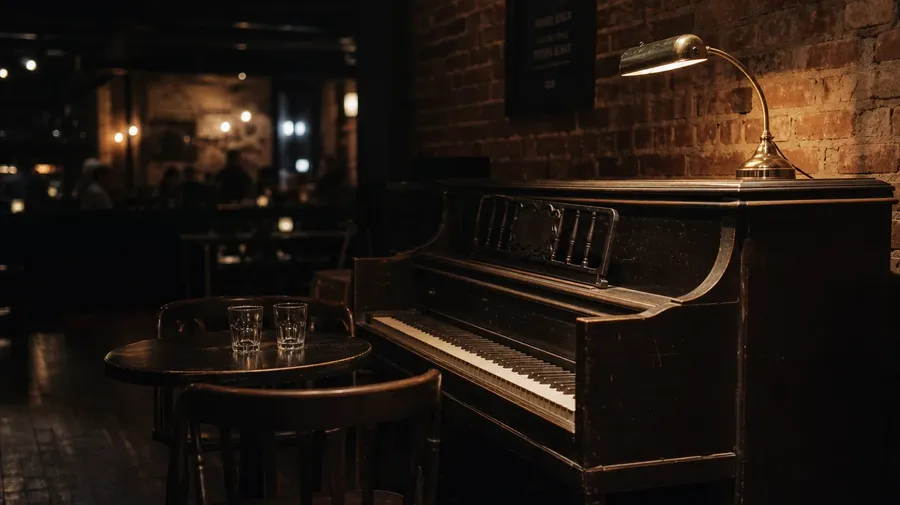
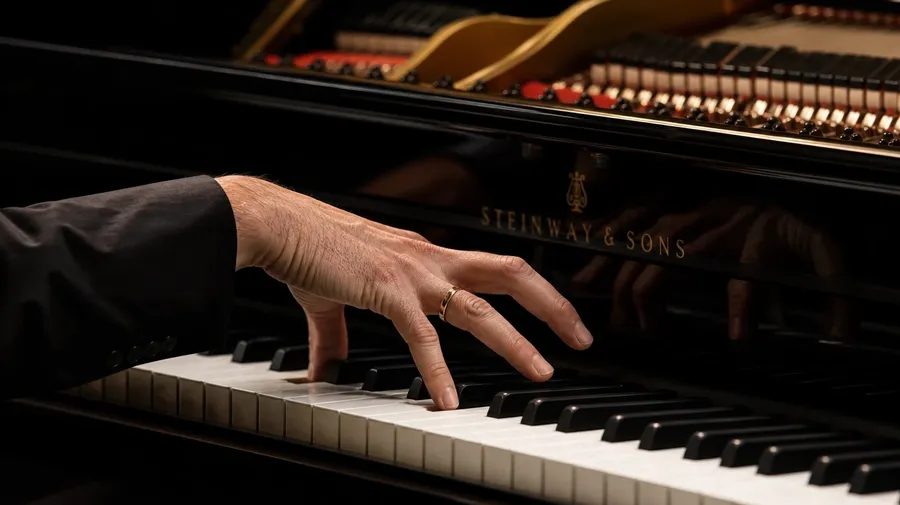
Across the instruments a piano stock campaign covers: a concert grand pianist in tails mid-recital under a spotlight on a dark hall stage, a jazz pianist at an upright in a dim club leaning into a low chord, an antique walnut parlor piano with brass pedals, a key-level close-up of fingers mid-passage.
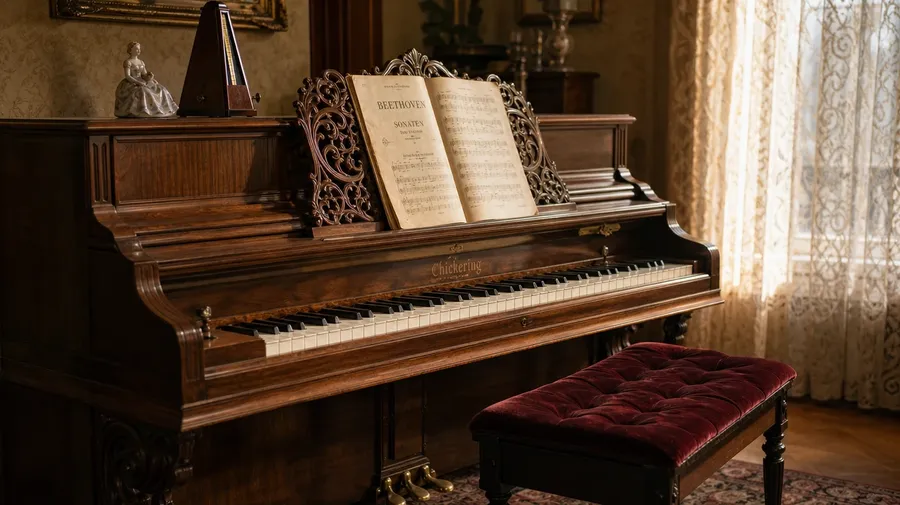
Where the keys catch light
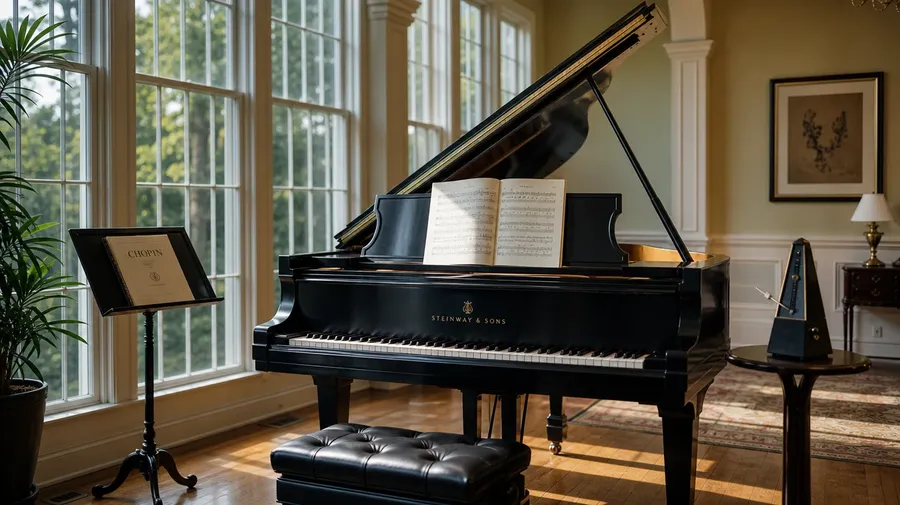
Render the venue around the keys: a darkened concert-hall stage with a spotlight on a polished black grand, a dim jazz-club corner with a brass lamp and an upright at the back, a sunlit conservatory practice room with morning light on a Steinway, a recording studio with mic stands behind a baby grand.
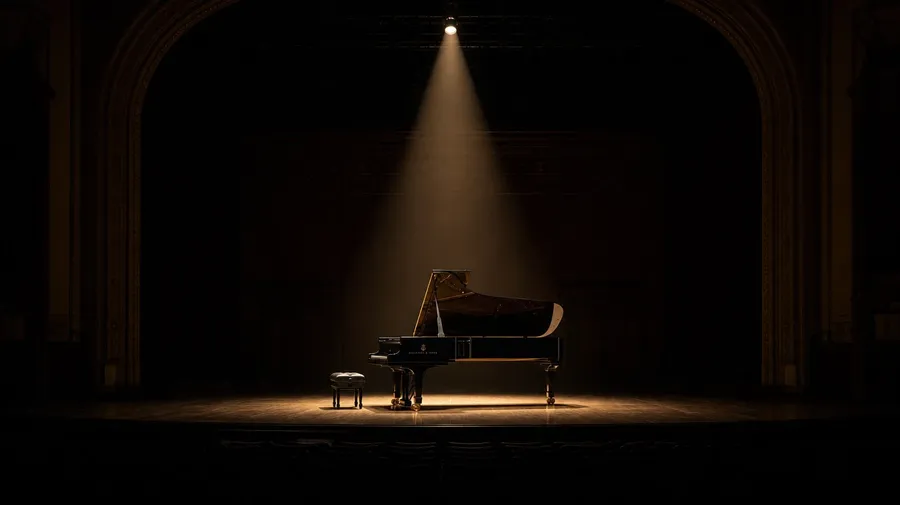
Stock pianos sit silent
Stock piano photography stops at the publicity portrait with the pianist at a closed-lid grand. Real shoots cover a pianist mid-octave-leap with the hand truly extended, a jazz pianist's left hand sustaining on low keys, a tuner's wedge between strings, an open grand showing the damper rail mid-passage. Off-the-shelf piano photos miss the music.
Frequently Asked Questions
Yes. Name the instrument, the player, the venue, and the moment. A concert grand pianist in tails mid-recital under a single warm spotlight on a darkened hall stage reads very differently from a jazz pianist at an upright in a dim club corner leaning into a low chord under a brass lamp, an antique walnut parlor piano in a sunlit living room with yellowed sheet music on the rack, a sunlit conservatory practice room with a student at a Steinway, or a key-level close-up of fingers mid-passage. The AI handles the hand and finger position, the instrument detail, the venue lighting, and the surrounding hall. Generate up to 16 at a time, compare the takes, pick the version that lands.
Yes, when the prompt names them. A concert grand pianist's high-arched classical hand on the keys reads differently from a jazz pianist's flatter chord-shaped hand, a polished black Steinway from a worn walnut antique upright with yellowed ivory keys, a darkened recital-hall spotlight from a dim jazz-club brass lamp, an open lid with the dampers visible from a closed lid for a closed-lid practice. Specify hand style, instrument, lid position, and venue light, and the AI handles the finger position on the keys, the lacquer reflection, and the focus separation between the player and the hall behind.
Yes. Save the pianist's face, attire, and posture or a specific piano (Steinway model, finish, signature scratches) as a custom Element and reference it with @LeadPianist or @StagePiano across new prompts. The Element carries identity forward, so an album-cover hero shot, a backstage moment before the recital, and a practice-room session all read as the same pianist on the same instrument. Useful for a record-label album-art series, a conservatory admissions campaign, and a piano-manufacturer catalog that needs one consistent face across the funnel.
Name the role and the setting. A piano tuner with a wedge between strings and a tuning fork on the music desk during regulation, a child at her first lesson reaching for middle C with her teacher kneeling beside the bench pointing at the keys, a small jazz combo on a club stage with the pianist at an upright at the back beside a stand-up bass and a hi-hat drummer, a duet at a recital with two pianists side by side at a grand for a four-hand piece, a church accompanist at a small upright supporting a choir at Sunday rehearsal: each carries its own cues that the AI honors when the prompt spells them out.
Yes. Every paid plan covers commercial use across ads, social, web, print, packaging, and presentations. Record-label album-art campaigns, conservatory admissions sites, piano-manufacturer catalogs, music-teacher and lessons marketing, concert-hall season campaigns, recording-studio brand launches, and editorial features all qualify under the same license, alongside every other category of AI stock photos.
Yes. Different categories run on the same prompt approach. Name the subject, the setting, and the light, and the same logic that produces music photography produces piano images: swap a guitarist's hand on the fretboard for a pianist's hand on the keys, a drummer at a kit on a club stage for a pianist at an upright at the back of the same stage, a violinist tucked under her chin for a soloist at a concert grand mid-recital. A multi-category record-label or concert-season campaign runs through one prompt box.
As specific as you want. A simple line like "a pianist at a grand" produces a usable baseline; the AI fills in the typical details (a polished black grand, an open lid, sheet music on the rack, a soft side light, a pianist seated at the keys). Add specifics for the parts that matter to the campaign: an instrument (concert grand, baby grand, upright, antique parlor), a player (classical in tails, jazz with hat, conservatory student, child), a venue (hall stage, club, practice room, parlor), a moment (mid-passage, octave leap, tuning, first lesson). The AI honors named details without overriding the rest. Each piano image gets the named details right.
Which piano scene does your album cover actually need?
Pick the piano type, the player, the venue, and the moment. The AI delivers piano photography that reads as a real performance, and Elements keep one performer consistent across an entire album-art series, conservatory campaign, or recording-studio brand launch.