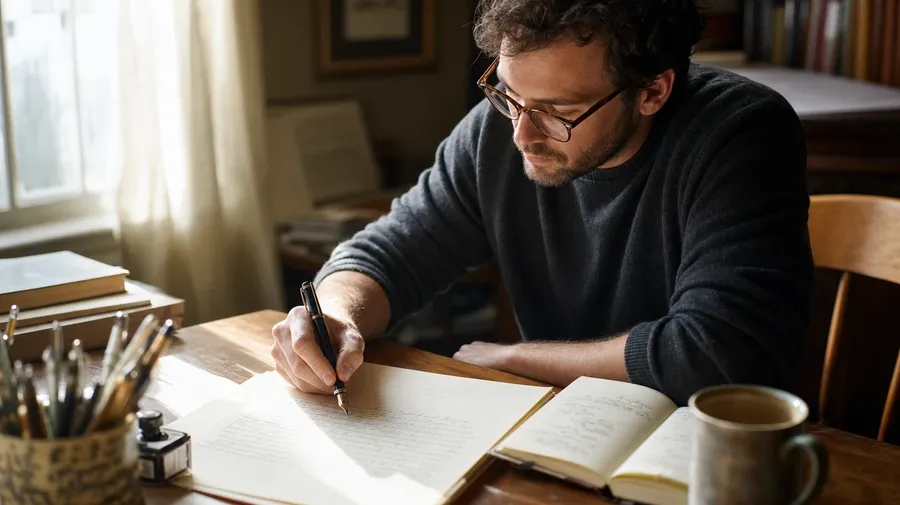
AI Stock Writing Images
Fiction drafts, journal entries, journalist notes, handwritten letters — generate writing imagery across every surface, tool, and stage of drafting. A novelist at a wood desk with a fountain pen mid-sentence, a journal spread with looping cursive about a road trip, a manuscript page with red editor's marks in the margin. Commercial rights on every paid plan.
Pick from 16+ image models for desks, journals, handwriting, and ink close-ups.
Auto mode reads each prompt and picks the model that fits.


How to generate custom writing images with getimg.ai
What sells a writing photo is the surface, the tool, and the stage of drafting. Name each and the AI delivers the writer your campaign needs, not a generic desk shot.
1. Name the surface, the tool, and what's on the page
Open getimg.ai and describe the scene: surface, tool, and what's being written. A simple line gives a baseline; specify pen weight, paper texture, ink color, or hand pose when you want exact control over those details.
2. Generate and compare
Sixteen takes at one go. Read each for pen-hold realism, ink flow on the paper, legibility of the handwriting, and how the desk around the writer reads as a real scene. Pick the version that lands.
3. Swap a detail
A first run picks one valid reading of your prompt. If you'd rather see a journal spread instead of a manuscript page, a felt-tip marker instead of a fountain pen, or a coffee-shop table instead of a quiet study, name the swap and run again. Several changes fit one prompt. Download the version you want to ship.
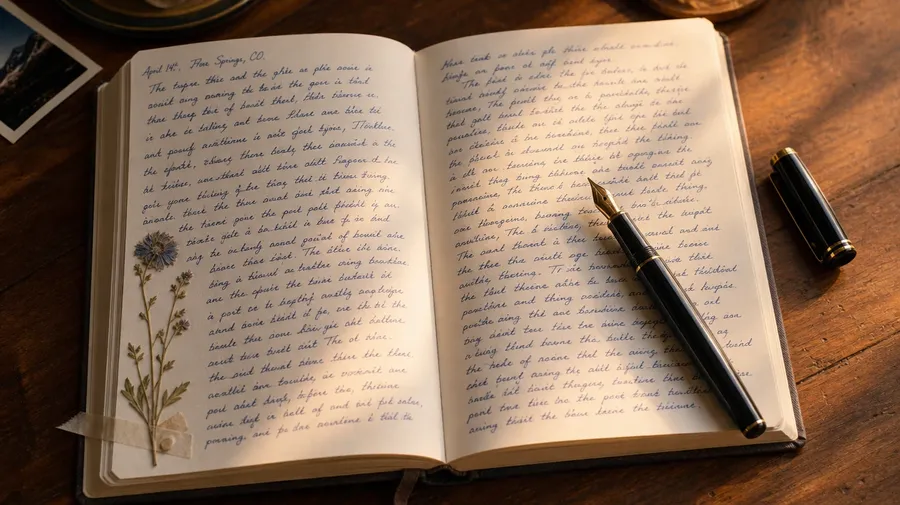
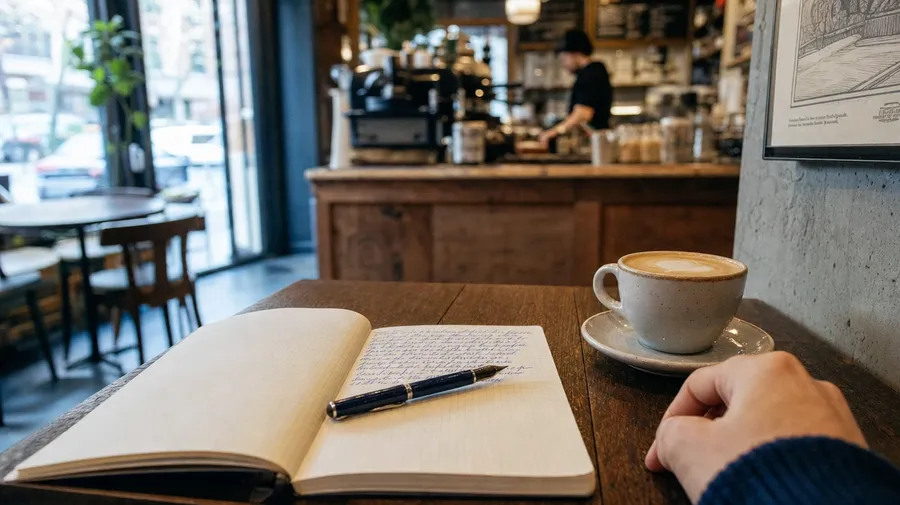
a journal spread with looping cursive about a road trip, fountain pen resting on the page, warm window light
Surface, tool, and the stage of drafting
Working writing shoots cover longhand drafting, journal entries, manuscript markup, and the close-up of pen on paper. Each surface, tool, and stage calls for its own pose and light.
Fiction, journals, journalism, letters
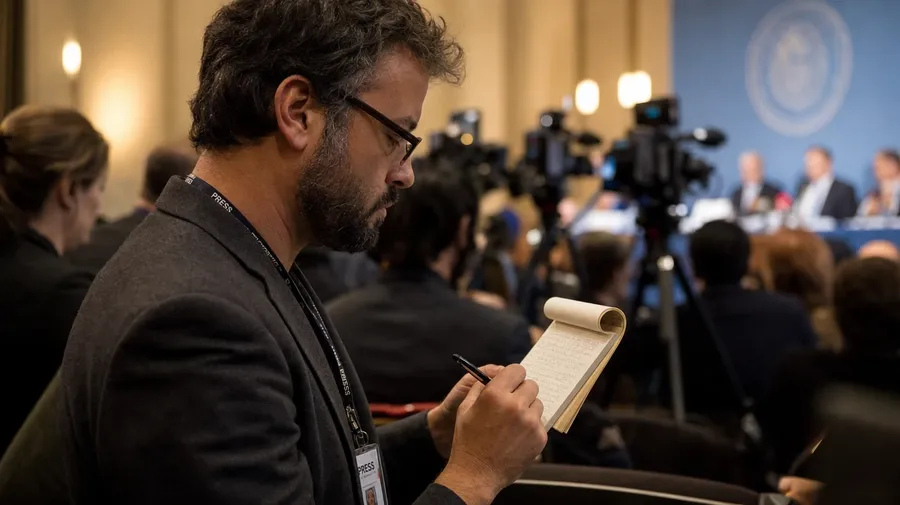
Across the writing modes a campaign covers: a novelist at a wood desk filling a fresh manuscript page, a journalist scribbling shorthand in a steno pad mid-interview, a student outlining an essay on lined paper, a calligrapher inking a wedding invitation, a diarist returning to the same journal for the third Sunday running.
Where writing actually happens
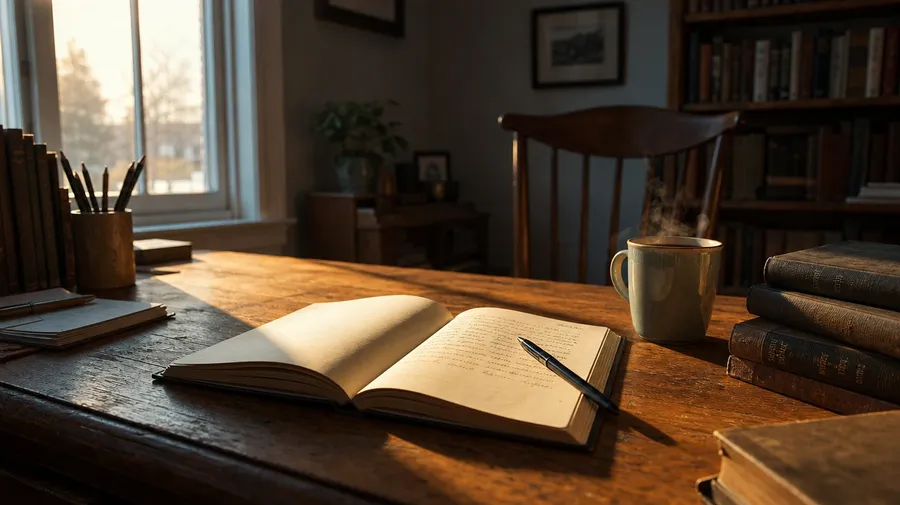
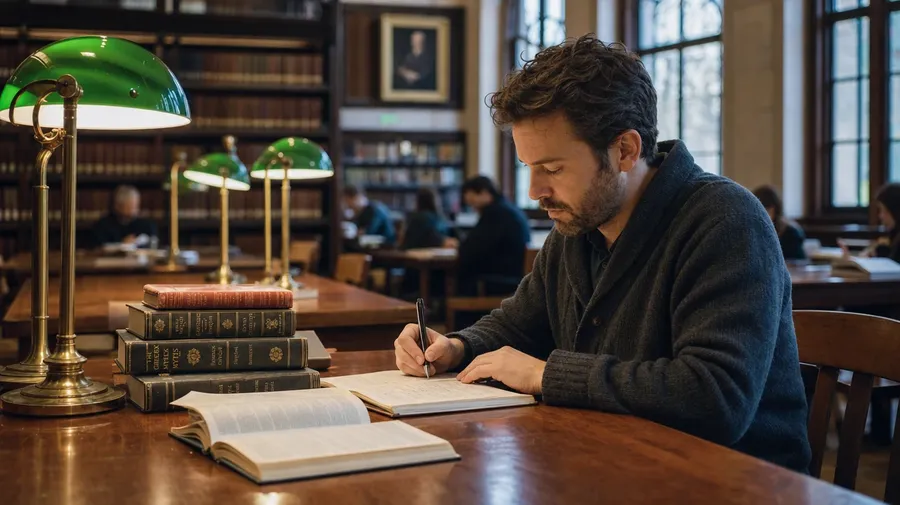
Render the settings the work happens in: a quiet study with morning light cutting across a wood desk, a corner table in a busy cafe with a notebook open beside a flat white, a public library reading room with green-shaded brass lamps and stacked reference books, a kitchen table with mail and pens and one half-finished letter.
Beyond the laptop-and-coffee shot
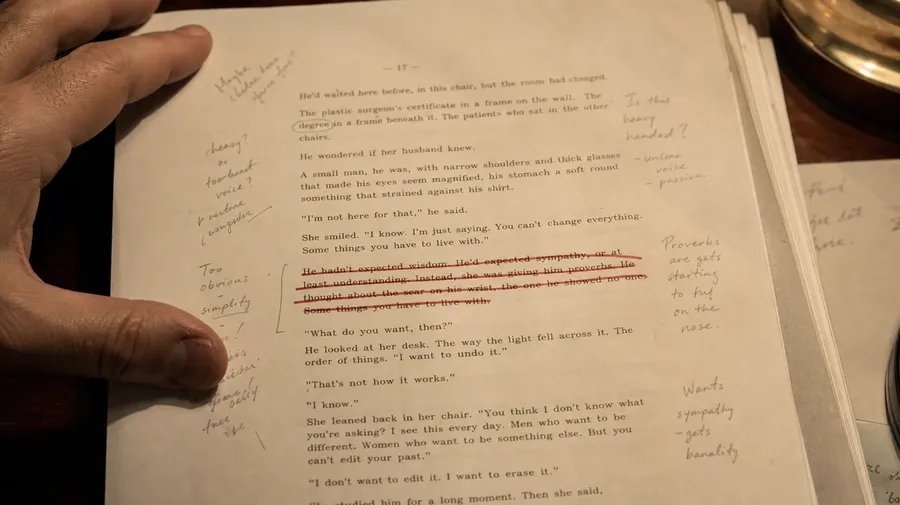
Stock writing photography stops at the laptop-and-coffee shot. Real shoots cover a novelist crossing out a paragraph with a red rollerball, a journalist's notebook with circled questions for the source, a calligrapher's failed first stroke on practice paper, a journal entry written in cursive on a real Sunday afternoon. Off-the-shelf writing photos miss the work.
Frequently Asked Questions
Yes. Name the writer, the surface, the tool, and the moment. A novelist mid-sentence at a wood desk under morning light reads very differently from a journalist scribbling shorthand in a steno pad at the back of a press conference, a calligrapher inking a wedding invitation under a desk lamp, a student outlining an essay on lined paper in a library reading room, or a diarist returning to the same journal in cursive on a Sunday afternoon. The AI handles the pen-hold, the ink flow, the legibility of the handwriting, and the surrounding desk detail. Generate up to 16 at a time, compare the takes, pick the version that lands.
Yes, when the prompt names them. A fountain pen with a broad italic nib reads differently from a ballpoint with thin printing, a confident left-handed cursive from a careful right-handed print, a fresh wet-ink line from a dried passage with corrections layered over the top. Specify pen type, hand orientation, handwriting style, and the paper texture, and the AI handles the ink saturation, the slight ridge of paper fiber, and the focus separation between the page and the room beyond.
Yes. Save the writer's face, desk, and lighting as a custom Element and reference it with @AuthorHero across new prompts. The Element carries face, build, glasses, sweater, and key-light direction forward, so a writing-at-desk shot, a publicity headshot in front of a bookshelf, and a coffee-shop drafting moment all read as the same author. Useful for an author-brand site, a book-tour campaign, and a newsletter that needs a consistent face across the funnel.
Name the role and the setting. A high-school student outlining an essay on lined paper at a kitchen table, a print journalist scribbling shorthand in a steno pad at the back of a press conference, a calligrapher pulling a stroke across textured invitation stock under a daylight lamp, a courtroom sketch artist working in fast graphite, a poet handwriting a verse in a small cloth-bound journal: each carries its own cues that the AI honors when the prompt spells them out.
Yes. Every paid plan covers commercial use across ads, social, web, print, packaging, and presentations. Publishing campaigns, book-cover marketing, magazine editorial, stationery-brand content, journal-product launches, online-course assets, and author-brand sites all qualify under the same license, alongside every other category of AI stock photos.
Yes. Different categories run on the same prompt approach. Name the subject, the setting, and the light, and the same logic that produces macro photography produces writing photos: swap a pen-tip ink-pool close-up on textured paper for a wide novelist-at-desk pull-back, a single ink drop on bond paper for a journal spread mid-entry, a typewriter-key extreme close-up for a calligrapher's full hand-and-page composition. A multi-category publishing campaign runs through one prompt box.
As specific as you want. A simple line like "a writer at a desk" produces a usable baseline; the AI fills in the typical details (the warm desk lamp, the open notebook, the pen resting on the page, the mug at the edge of the frame). Add specifics for the parts that matter to the campaign: a writing role, a surface, a pen type, a moment in the drafting process, an architectural detail of the room behind. The AI honors named details without overriding the rest. Each writing stock image gets the named details right.
Generate the writing scene your campaign actually needs.
Pick the writer, the surface, the tool, and the moment. The AI delivers writing photography that reads as real drafting, and Elements keep one author consistent across an entire publishing series.