AI Turkey Pictures Generator
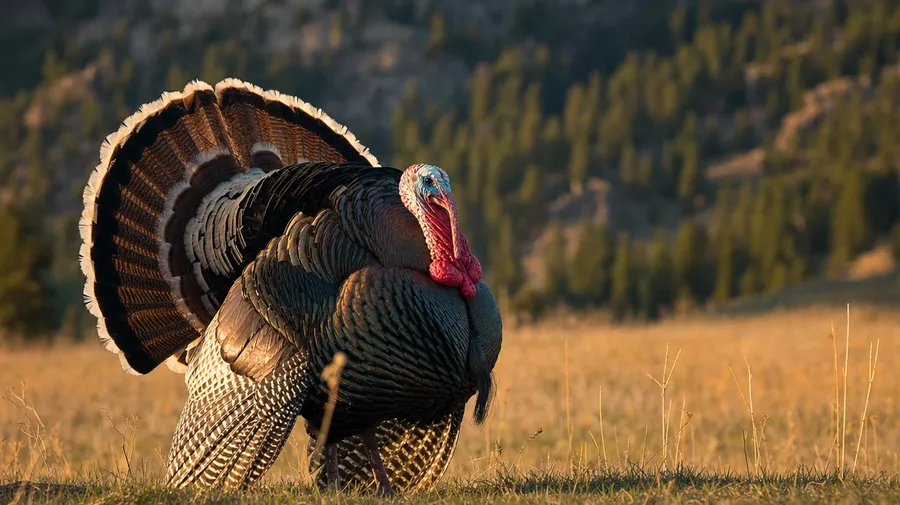
Iridescent plumage, fan-tail strut, snood and wattle, a brood of poults in the underbrush — turkey photography that catches the bird's actual character. A Merriam's tom at first light, a heritage-breed Bourbon Red on a snowy farm morning, a wild hen leading six poults through dappled woodland. Commercial rights on every paid plan.
Wild woodlands, farmyards, and studio packshots on 16+ image models.
Auto mode picks the one that matches your prompt.


How to generate custom turkey pictures with getimg.ai
What makes a turkey photo land: the species, the plumage stage, and the moment (strutting, feeding, brooding, in flight). Three steps name each.
1. Name the species and the moment
Open getimg.ai and describe the species, the habitat, and what the bird is doing. A simple line gives a baseline; specify plumage stage, light direction, or behavior cue when you want exact control over those details.
2. Generate and compare
Sixteen takes in one batch. Across the takes, compare iridescent plumage detail, eye and snood sharpness, posture accuracy, and how the woodland or farm setting reads behind the bird. Pick the version that lands.
3. Swap a detail
A first run picks one valid reading of your prompt. If you'd rather see a tom mid-gobble instead of a strutting pose, a snowy December farmyard instead of an autumn woodland clearing, or a flock of three instead of a single bird, name the swap and run again. Several changes fit one prompt. Download the version you want to ship.
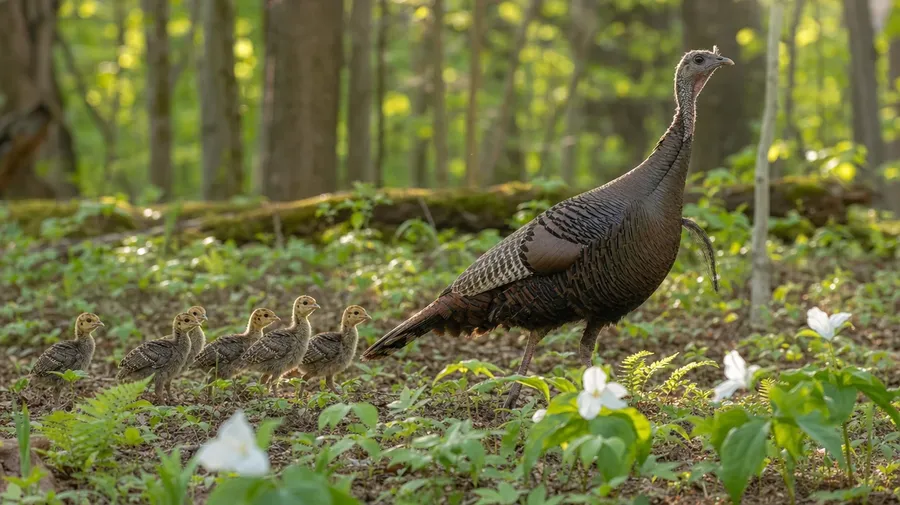
a hen turkey leading six poults through dappled spring woodland, soft afternoon light, telephoto
Species, plumage stage, and the habitat behind
Working turkey shoots cover wild Merriams and heritage Bourbon Reds, juvenile poults and full-strut toms, dappled woodlands and snowy farmyards. Each axis changes the photograph.
Merriam's, Eastern, heritage Bourbon Red
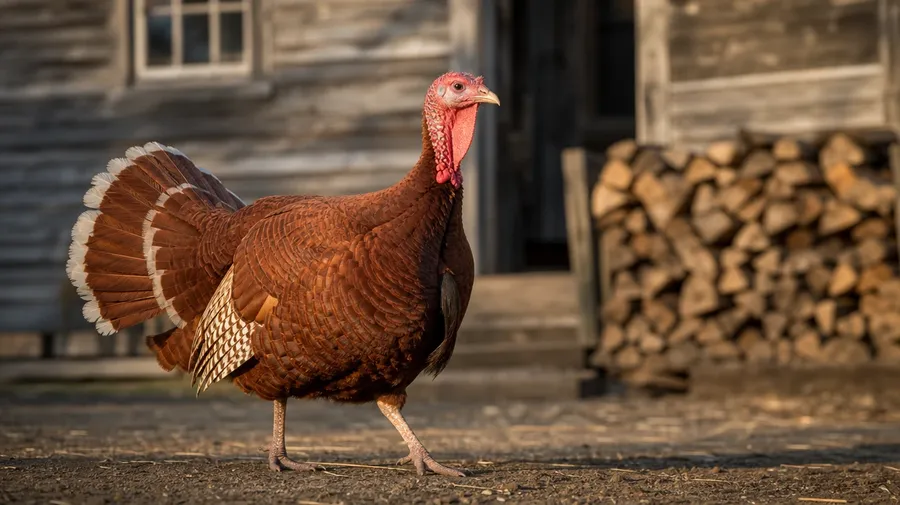
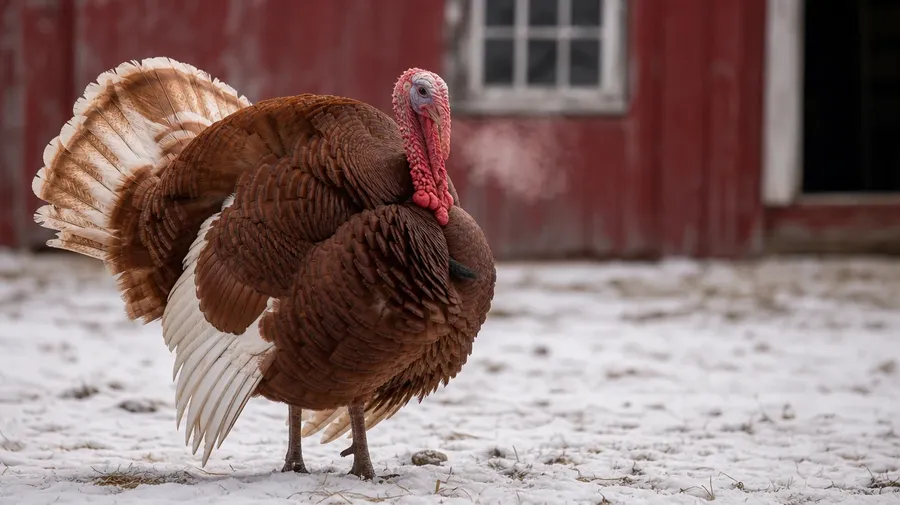
Across the wild and farm species campaigns actually need: an Eastern wild turkey in Appalachian hardwoods, a Merriam's tom in a Western mountain meadow, a Rio Grande feeding along a Texas creek, a heritage Bourbon Red on a New England farm, a Royal Palm hen with white-and-black barred plumage. Each species carries its own coloration.
Habitat changes how the bird reads
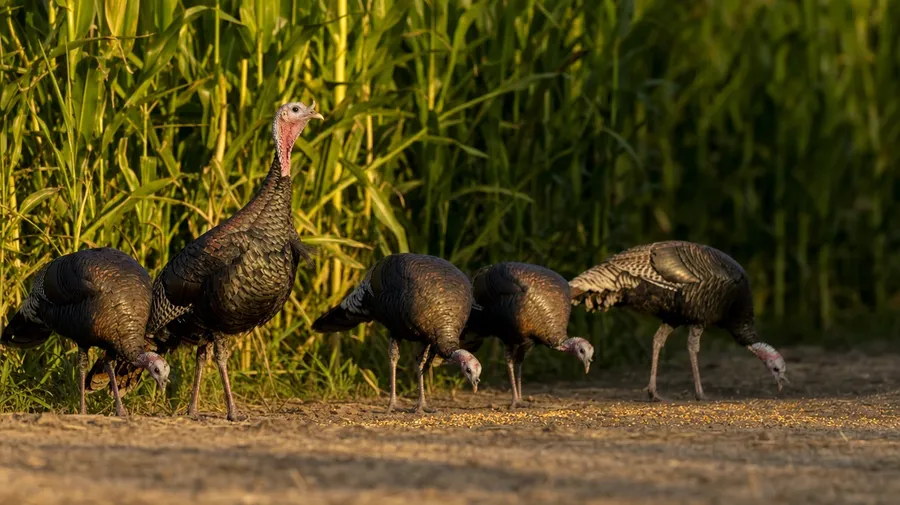
Habitat shapes a turkey photograph as much as the bird does: a dappled hardwood understory at sunrise, a frost-rimed pasture at first light with a puffed tom, a mid-summer cornfield edge with a foraging flock, a New England barnyard at golden hour. Each setting changes the read.
Beyond the same Thanksgiving carving shot
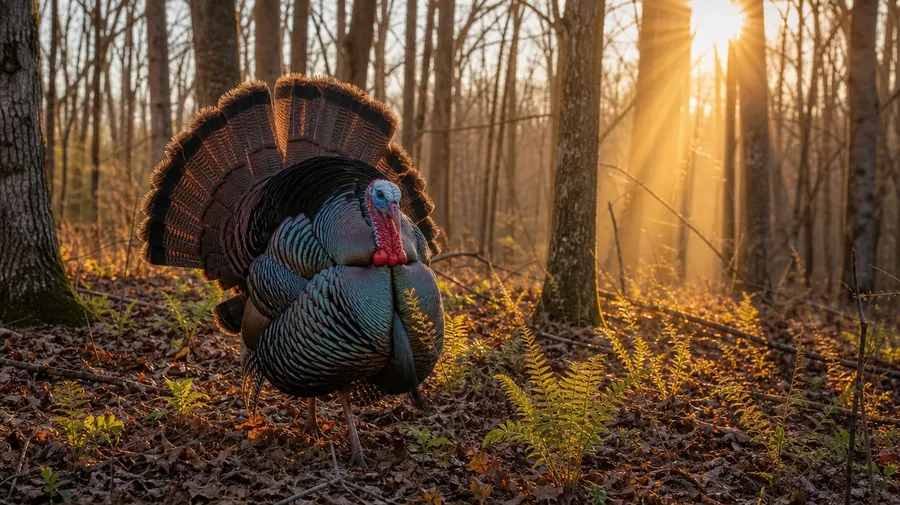
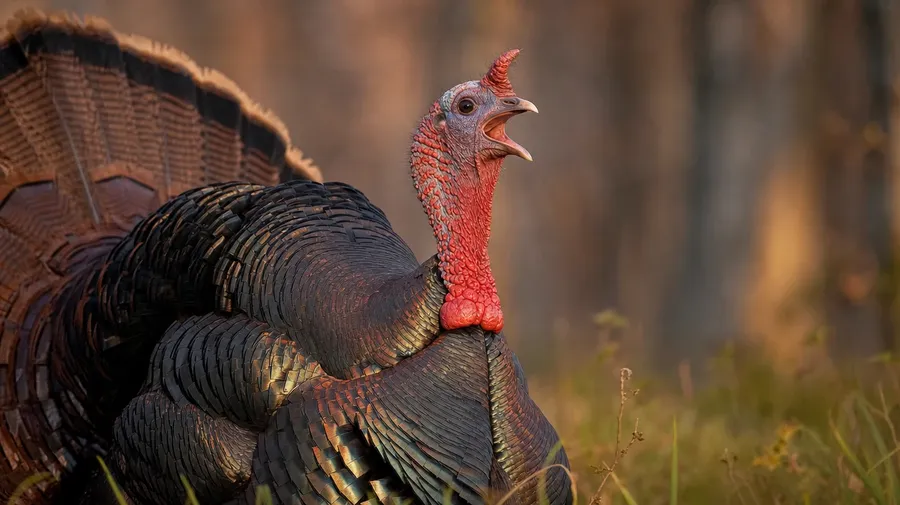
Stock turkey pictures stop at the same carved bird on a holiday table. Real shoots cover a tom mid-gobble at first light, an iridescent fan-tail flared in mating display, a Royal Palm hen with poults trailing through grass, a single feather catching backlight in mid-air. Off-the-shelf turkey stock misses the bird itself.
Frequently Asked Questions
Yes. Name the species, the plumage stage, the habitat, and the moment. An Eastern wild turkey strutting through Appalachian hardwoods at first light reads very differently from a Merriam's tom in a Western mountain meadow, a Rio Grande feeding along a Texas creek, a heritage Bourbon Red on a New England farm in December snow, or a Royal Palm hen leading poults through dappled grass. The AI handles the iridescent plumage, the bare red-and-blue head, the snood and wattle, and the way light catches the feather barring. Generate up to 16 at a time, compare the takes, pick the version that lands.
Yes, when the prompt names them. A puffed tom in full strut reads differently from a feeding hen in low alert, an Eastern's bronze-iridescent plumage from a Merriam's white-tipped tail fan, a summer tom's bare head from a colder-season tightened snood. Specify the species, the behavior, the season, and the light direction, and the AI handles the feather barring, the bare head's red-and-blue cast, the dangling snood, and the bristly chest beard.
Yes. Save a specific tom or hen as a custom Element and reference it with @PrideTom or @YardHen across new prompts. The Element carries plumage pattern, beard length, head coloration, and body proportions forward, so the same bird appears strutting in spring woodland, feeding in a summer field, and dusted with snow in a December farmyard, all reading as one bird. Useful for a heritage-farm marketing series, a wildlife photography portfolio, or an editorial feature on a single subject.
Name the subject and the scale. A clutch of fluffy poults trailing a hen through dewy grass, a tom in mid-flight with wings flared and tail tucked, a macro of a single iridescent breast feather on a dark surface, a close-up of a wattle and snood against early morning frost, an extreme close-up of a turkey eye reflecting the woodland: each carries its own cues that the AI honors when the prompt spells them out.
Yes. Every paid plan covers commercial use across ads, social, web, print, packaging, and presentations. Heritage-farm marketing pages, Thanksgiving-themed brand campaigns, wildlife-publication editorial, hunting-magazine illustrations, organic-poultry packaging, conservation-org marketing, and farm-to-table restaurant menus all qualify under the same license, alongside every other category of AI stock photos.
Yes. Different subjects run on the same prompt approach. Name the subject, the setting, and the light, and the same logic that produces horse photography produces turkey pictures: swap a chestnut mare in a snowy paddock for a tom in a snowy farmyard, a foal nuzzling its dam for a hen with trailing poults, a horse mid-gallop for a turkey mid-flight. A multi-subject farm campaign runs through one prompt box.
As specific as you want. A simple line like "a wild Eastern turkey strutting in fall woodland" produces a usable baseline; the AI fills in the typical details (the iridescent plumage, the fanned tail, the dappled forest floor, the soft autumn light). Add specifics for the parts that matter to the campaign: a particular species, a plumage stage, a behavior, a habitat, a time of day. The AI honors named details without overriding the rest. Each turkey stock image gets the named details right.
Photographs of the actual bird, not the dish or the country.
Pick the species, the habitat, the behavior, and the light. The AI delivers turkey photography that catches the bird's character, and Elements keep one tom or hen consistent across a whole series.