#1 AI Classical Music Generator
Classical music works through melody, dynamics, and the color of a real orchestra. Describe the piece you're imagining: the mood, the instruments, the era. getimg.ai writes the rest, a theme that carries, full parts for strings, woodwind, brass and piano, and a recording with the depth of a concert hall.
Neoclassical Waltz
Renaissance-Inspired Court Dance Suite
Baroque Passacaglia
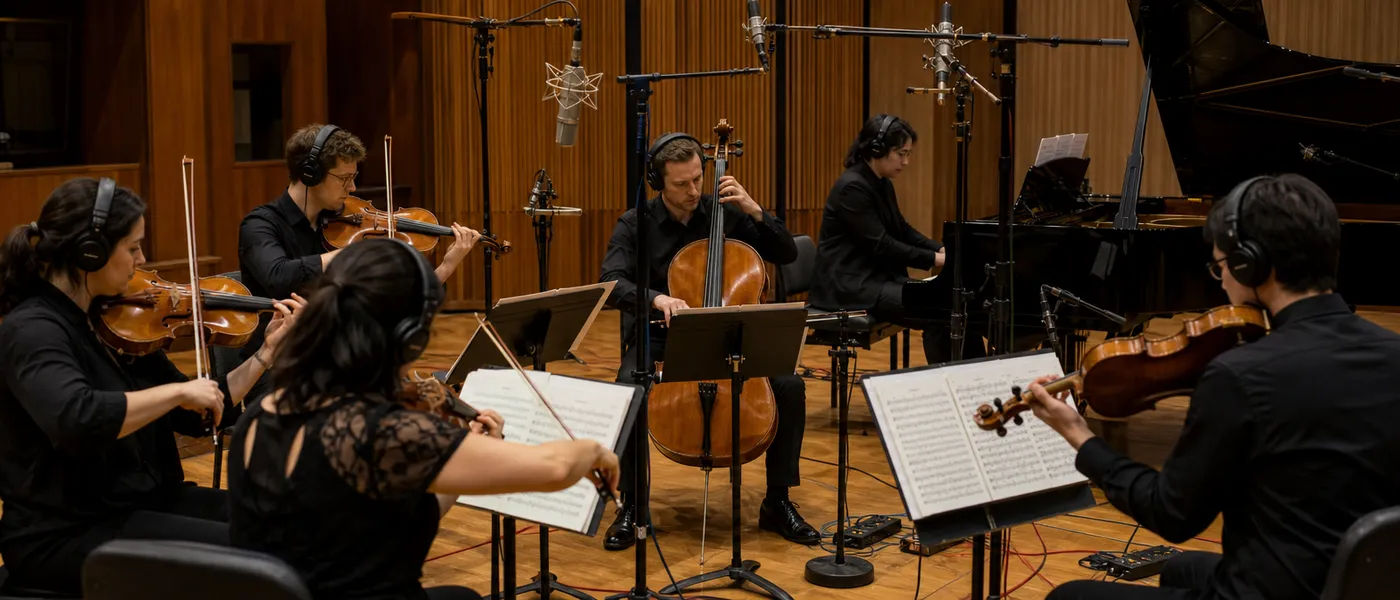
Classical String Quartet
What makes orchestral music move you
A wall of sound isn't the same as a piece that holds a room. What actually carries an audience is more specific than volume, and it's exactly what getimg.ai is built to deliver.
A theme worth returning to
Every piece that lingers rests on a single melodic idea, the kind you catch yourself humming on the way out of the hall. That theme is where getimg.ai starts, and it brings the line back across the piece, deepening it each time instead of letting it drift.
The depth of a real ensemble
Strings that swell, woodwind answering underneath, brass for the weight, and a piano with genuine touch, captured with the air and space of a proper session. None of it reads as a flat sample library.
Built to rise and fall
Classical lives in the gap between a hush and a full crescendo. getimg.ai writes that contrast into the arrangement, so a cue can sit quietly under dialogue and then open right up the moment the scene asks for it.
This used to mean hiring an orchestra
A composer to write the score. An orchestrator to spread it across the sections. A copyist for the parts, a conductor to lead, and a hall full of players to record it, then an engineer to balance the result. That is a long chain of fees and calendars, and not a single bar is heard until the session day finally arrives.
-1920x983.webp)
With getimg.ai
Brief the piece
Set the mood, the era, the instruments out front, even a composer whose style you're after. The more of the scene you describe, the closer the first pass lands.
Compose it
Within seconds a complete piece is playing back, the theme stated, the full arrangement around it, and the recording finished together.
Place it
Download the file and lay it under a film scene, a trailer, a game chapter, a podcast, or a luxury brand spot.
The orchestra route
- Commission a composer and wait on the first sketch
- Have the score orchestrated across every section
- Pay a copyist to prepare parts for the players
- Book a hall and a roster of session musicians
- Engage a conductor to lead the session
- Track the full ensemble across a recording day
- Balance the sections into a finished master
- Send notes and pay again for each new session
- Cover the players, the hall, and every license
Classical isn't one era
A baroque concerto and a spare contemporary piano piece are centuries and worlds apart, yet both sit under classical. Tell getimg.ai where on that map your piece belongs.
Direct the whole piece
A classical work unfolds in sections: a theme stated, developed, and resolved. You can guide each of those turns, whether you arrive with a precise vision or hand getimg.ai a mood and a reference and let it find the shape.
Classical Étude
Frequently Asked Questions
An AI classical music generator composes a finished classical piece from a written description, with the theme, the full arrangement, and the recording all in place, and no orchestra, hall, or session to book.
What sets a classical tool apart is its grasp of the form. It writes a melodic theme, develops it through the sections of an ensemble, shapes the dynamics from a hush to a crescendo, and renders the result with the air of a live recording. It runs on Google Lyria 3 Pro, composes pieces up to three minutes long, and delivers them as .mpeg files.
Composers use it to sketch cues and pitch ideas, film and game teams to score scenes, marketers to give brand films a sense of occasion, and creators to underscore videos and podcasts without licensing headaches.
Not at all. You describe the piece in plain language, the mood, the instruments, the moment it has to support, and getimg.ai handles the composition, the harmony, and the orchestration. Knowing a sonata from a symphony helps you brief it precisely, but it is in no way required to get a polished result.
That is the bar it aims for. The writing is spread across genuine orchestral sections, the dynamics breathe the way live players phrase them, and the recording carries the space of a scoring stage rather than a flat patch. Generate a few passes and keep the one that moves you most.
Use them commercially, in full. Every paid plan grants complete rights to the music you generate, so a piece can underscore a film or series, anchor an ad campaign, sit inside a game, set the tone at an event, or go out on streaming, with nothing further to clear or license.
For professional work, getimg.ai is the standout. It covers the whole tradition, from solo piano to a full Romantic orchestra, and each piece arrives complete, with a developed theme, a balanced arrangement, and a concert-quality mix. Billing is per piece, commercial rights are included, and because the same account also runs music generation next to image and video tools, a single score can grow into album artwork and a visualizer without leaving the project.
Compose a finished score in seconds
A complete classical piece, theme and full orchestration and recording together, from a single description. Solo piano to full orchestra, 30 seconds to three minutes, and ready to use the moment it finishes.